
2,300 MILES
WALKING FOR PEACE


America is loud right now. Not productive loud. Leaf-blower-at-6-a.m. loud. Everyone has a microphone, nobody has patience, and the national posture is a permanent forward lean toward the next outrage. Into this circus walked a dozen Buddhist monks who decided the correct response was to shut up and start walking.
Not marching. Not rallying. Walking. Two thousand three hundred miles of it, from Fort Worth, Texas, to the marble pressure cooker known as the United States Capitol.
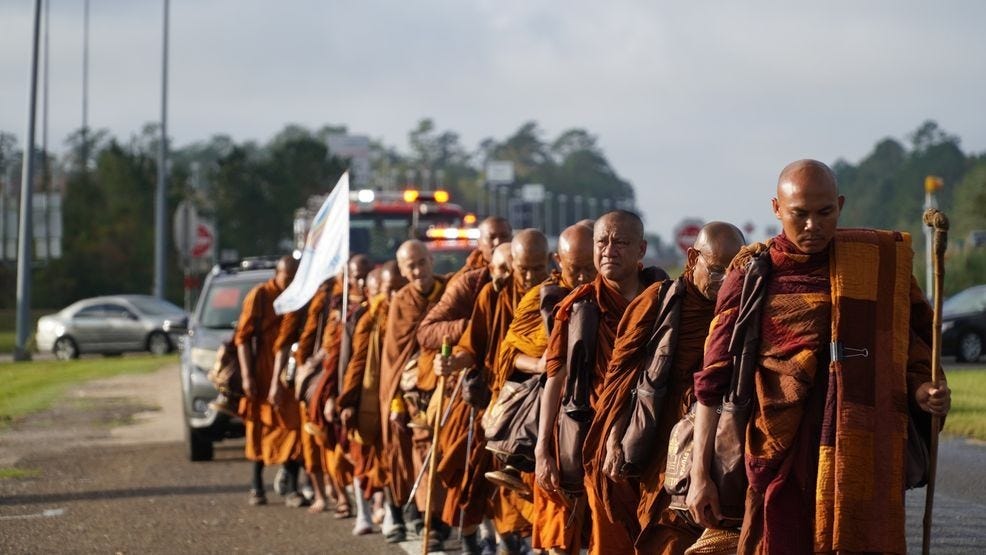
The monks come from Huong Dao Buddhist Temple, a community rooted in discipline, meditation, and the deeply unfashionable belief that inner work precedes outer change. Which immediately disqualifies them from most American movements, where branding usually comes first and thinking comes later.
They left on October 26, 2025, planning a 120-day pilgrimage with an arrival date of February 13, 2026. No list of demands. No carefully vetted language. No “movement partners.” Just the radical gamble that example still matters.
THE RULES THAT MAKE THIS UNCOMFORTABLE
This isn’t a vibes walk. The monks are following strict monastic practice the entire way.
One meal a day.
Sleeping outdoors under trees.
Minimal possessions.
Total reliance on donations and human decency.
That last one is doing a lot of work in 2025.
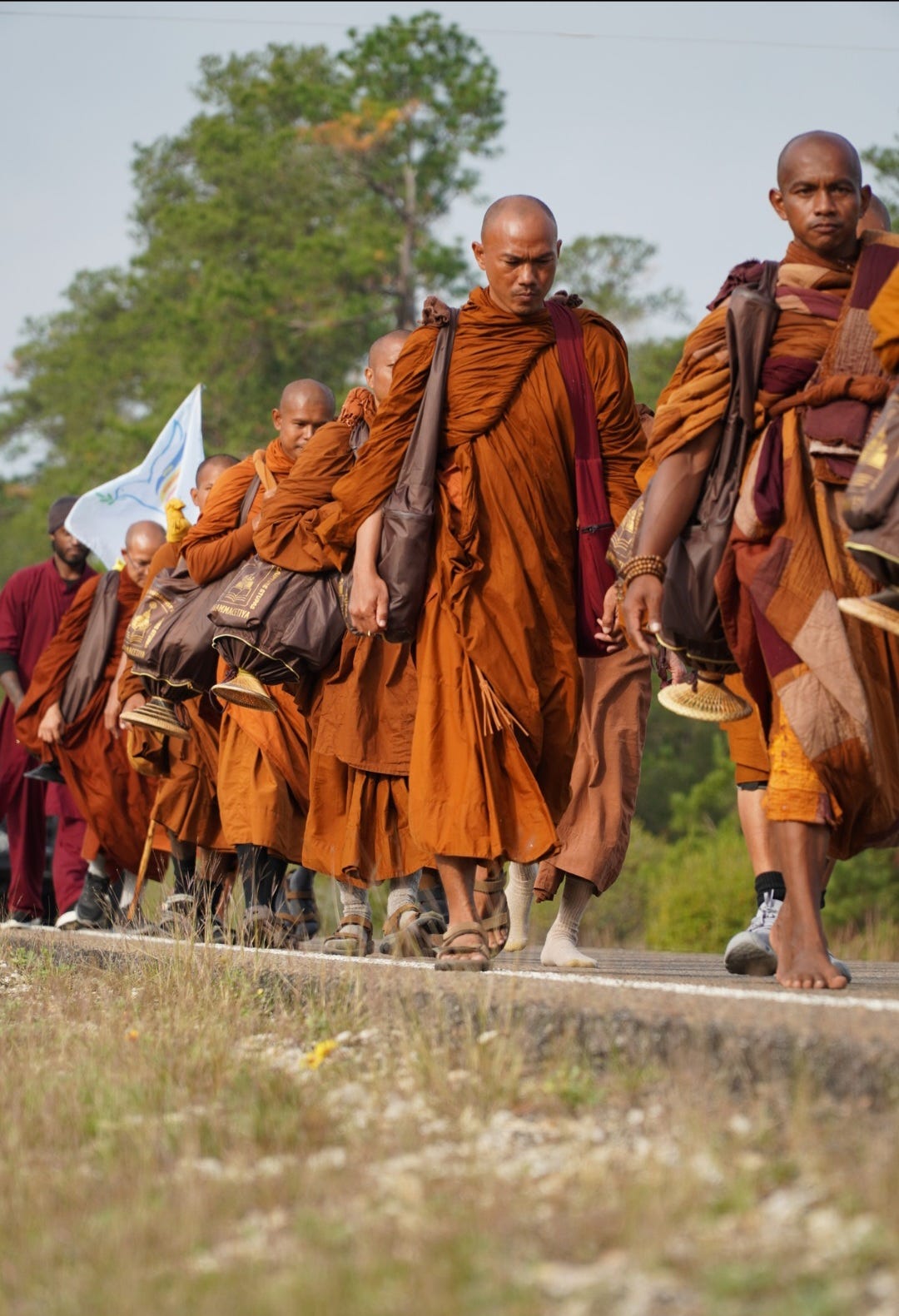
There’s no safety net here except community. Which means every mile is a quiet referendum on whether people still know how to be people.
TRAGEDY ALONG THE TREK
On November 19, a truck struck the pilot vehicle escorting the group in Texas. The impact pushed the vehicle into the monks. Two were seriously injured. One monk lost his leg.
If this were a normal American story, the walk would end there. Lawsuits. Fundraisers. Trauma-branding. A pivot to speaking engagements and inspirational merch.
That didn’t happen.
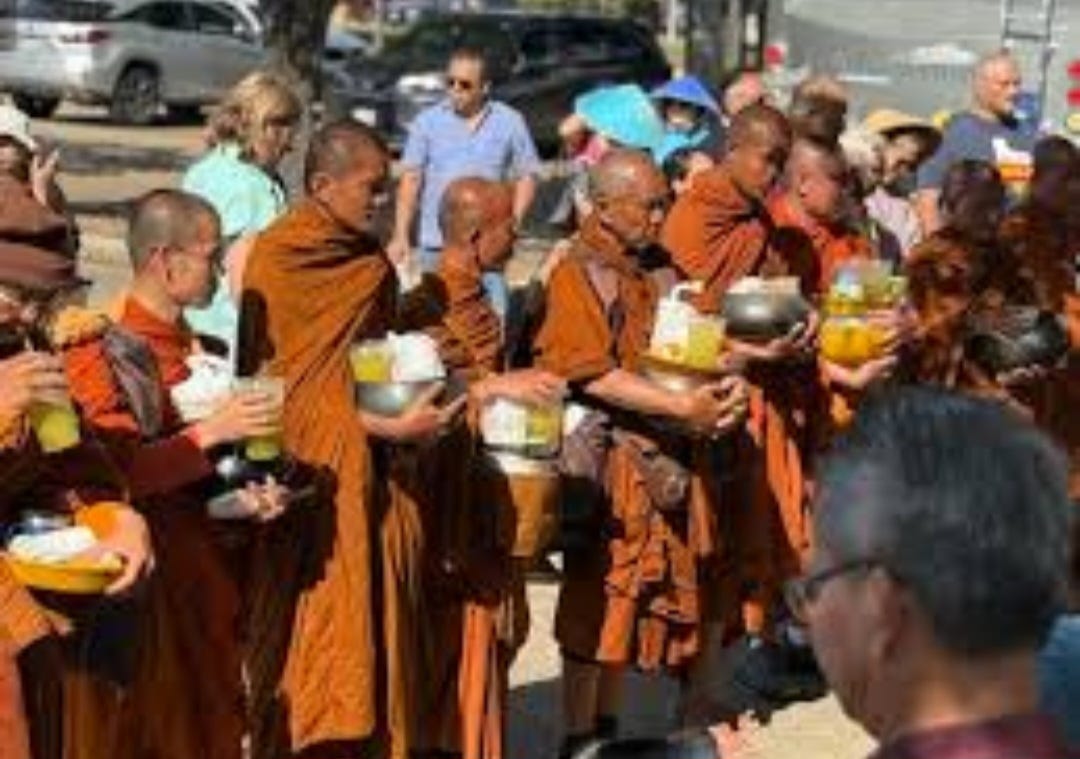
They paused. They issued a statement asking for prayers. They expressed gratitude. And they kept going.
The monks didn’t turn the injury into a moral cudgel. They didn’t demand attention. They didn’t convert suffering into spectacle.
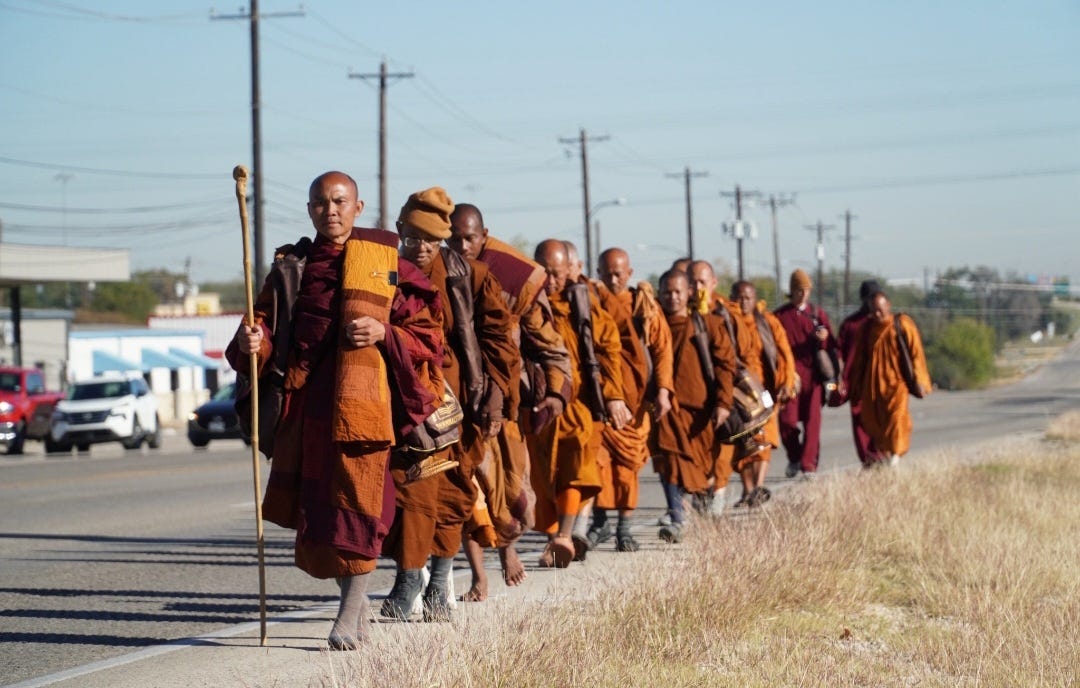
They absorbed it and kept moving.
That’s not softness. That’s discipline so severe it borders on confrontation. It dares the rest of us to explain why we collapse over inconvenience while they recalibrate after catastrophe.
WHY WALKING WORKS WHEN TALKING FAILS
Walking is slow. It denies the modern addiction to immediacy. You can’t doomscroll a pilgrimage. You encounter it. On a shoulder of a road. At a gas station. In a town you forgot existed.
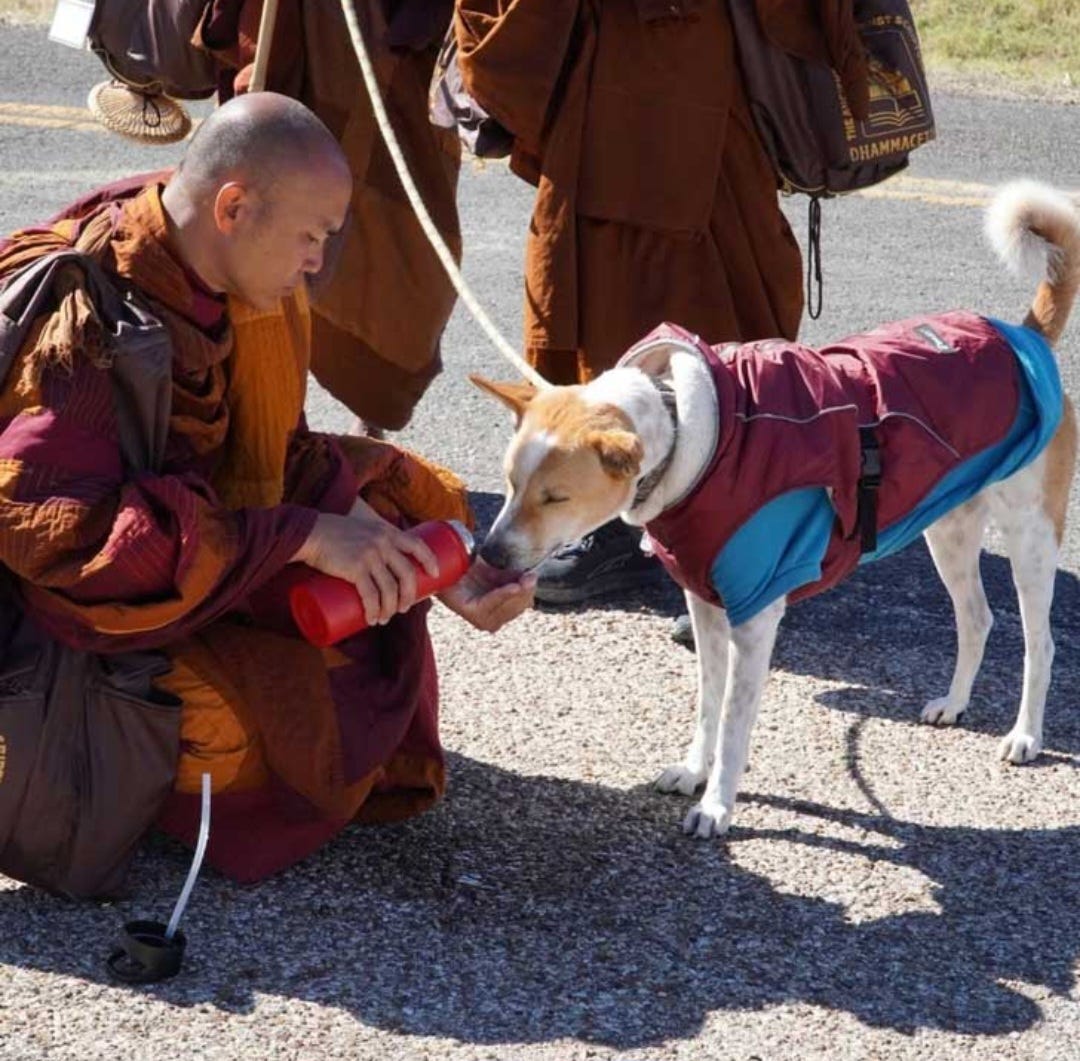
This walk bypasses the outrage economy entirely. No algorithm can speed it up. No pundit can own it. No political tribe can fully claim it without missing the point.
Peace isn’t being argued. It’s being demonstrated at three miles an hour.
WHY D.C. IS THE DESTINATION
They’re heading to Washington because Washington is where America pretends to be coherent. But when they arrive, there will be no siege of conscience, no legislative wish list, no grand finale.
Just a brief message. Then silence.
Which means the burden doesn’t land on politicians. It lands on the rest of us, who will have watched people cross ten states on foot and still insist the problem is “them” and not how we live.
THE PART NO ONE WANTS TO ADMIT
This walk isn’t about Buddhism. It’s about exposure.
Exposure of how little most movements are willing to sacrifice.
Exposure of how allergic we’ve become to patience, humility, and quiet resolve.
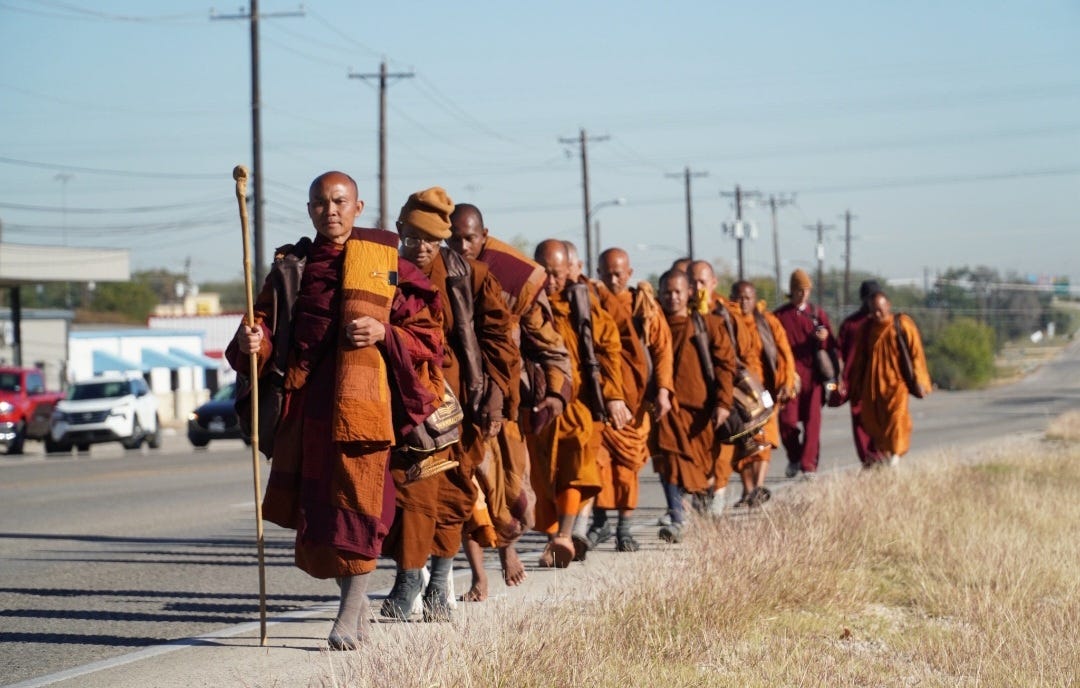
A dozen monks and a dog are crossing America without asking for anything except space to walk. And somehow that feels more threatening than a thousand angry speeches.
That tells you everything you need to know.
WHEN THEY ARRIVE
February 13, 2026. No fireworks. No slogans. Just worn sandals, scarred bodies, and proof that peace is not a sentiment. It’s a practice. One step at a time.
America can watch. Or keep yelling.
Either way, they’ll still be walking.
Closer to the Edge exists to surface moments like this. Stories that quietly expose how hollow our outrage culture is, how little most movements risk, and how discipline, care, and responsibility still scare the hell out of a system built on noise.
If you want reporting that doesn’t blink, doesn’t sanitize, and doesn’t confuse volume for courage, subscribe. We follow the long walk, not the loud crowd.
Do we have an idea of their journey’s route? I would like to help them if I am able. The winter weather they are going to encounter, with below freezing temps, at night are definitely a grave concern. Their silence, faith, and steadfastness of purpose is uplifting and their selfless perseverance is a living lesson for us to reflect upon.
That Ft Worth temple/monastery was one of the few places where “holding space” meant something meaningful when I lived there.