
A LETTER TO JUSTICE KAGAN
I HAVE A COUPLE OF QUESTIONS


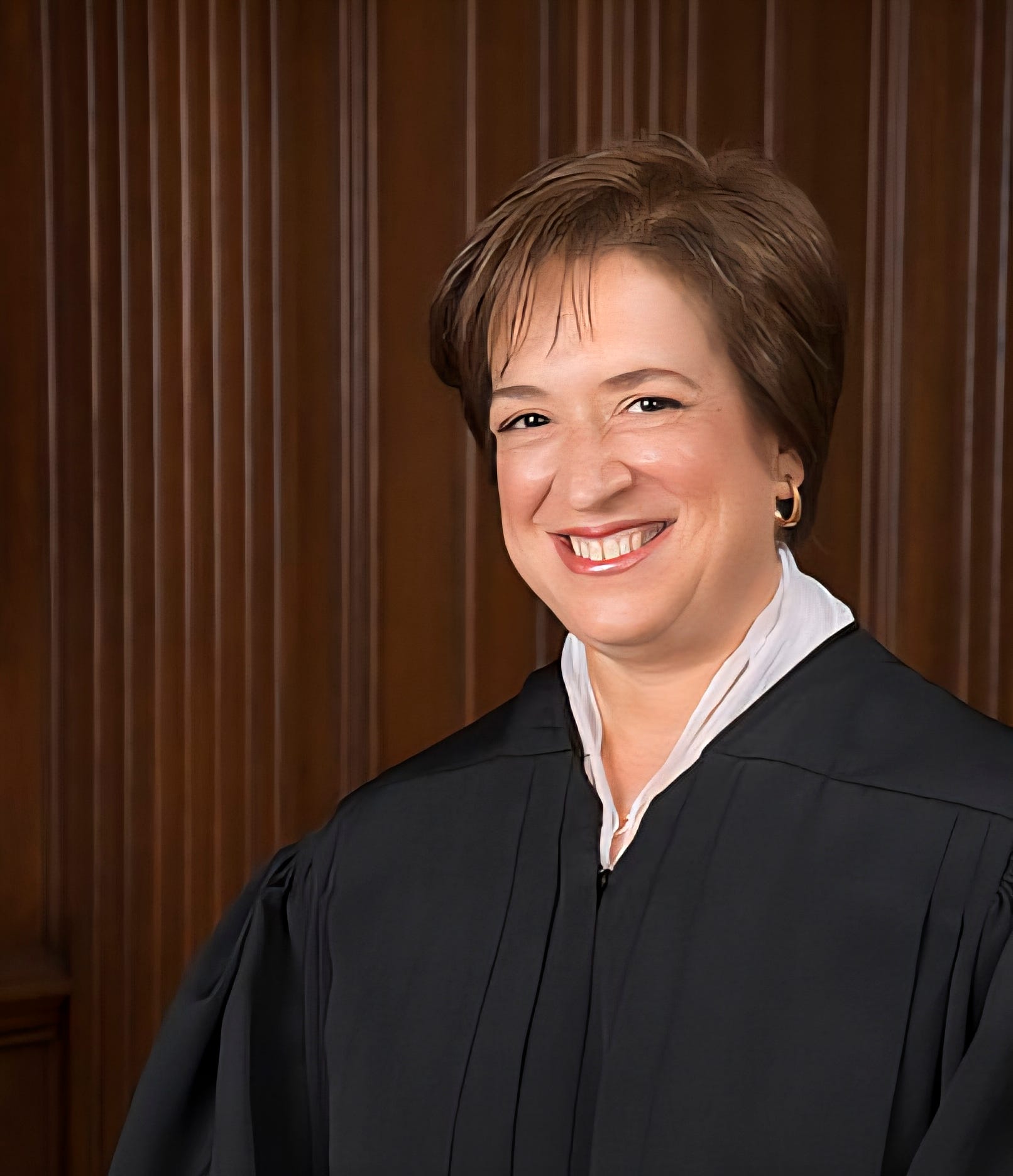
Justice Elena Kagan
Supreme Court of the United States
1 First Street NE
Washington, DC 20543
Justice Kagan,
Your approach to constitutional interpretation has always rested on the premise that words matter. With that in mind, here is the operative clause at issue, Section 3 of the Fourteenth Amendment:
“No person shall be a Senator or Representative in Congress, or elector of President and Vice President, or hold any office, civil or military, under the United States, or under any State, who, having previously taken an oath . . . to support the Constitution of the United States, shall have engaged in insurrection or rebellion against the same, OR given aid or comfort to the enemies thereof. But Congress may by a vote of two-thirds of each House remove such disability.”
January 6 has been consistently recognized by federal courts as an insurrection. The facts support the term: an organized, violent effort to disrupt the constitutional counting of electoral votes.
What came four years later is equally important. Trump used his clemency powers to free J6 organizers, pardon every remaining convicted participant, and direct the Justice Department to shut down all pending cases tied to the attack. These actions were sweeping, immediate, and absolute — a total dismantling of the legal consequences for the people who carried out an insurrection.
A pardon is not rhetorical sympathy. It is a binding executive act that removes penalties and communicates institutional approval, or at minimum institutional protection. When an oath-bound official extends that protection to people who engaged in an insurrection, the constitutional language about “aid or comfort” becomes not theoretical but unavoidable.
This leads to two questions. First, from a text-centered perspective, does this set of facts satisfy the “aid or comfort” clause of Section 3? Second, procedurally, can a private citizen and journalist like myself bring such a question before the courts, or does the Constitution limit enforcement to institutional plaintiffs such as legislators, electors, or state officials deciding ballot access?
The Fourteenth Amendment was designed to function, not sit dormant. I am asking how — and by whom — it can be invoked.
Respectfully,
Rook T. Winchester
Closer to the Edge is growing because readers like you are done with milquetoast media and want journalism with teeth, spine, and zero patience for fascist nonsense, and if you’ve stuck with us this far, you already know how much time, reporting, legal vetting, caffeine abuse, and emotional combustion goes into every piece we publish, so if you want us to keep digging, keep exposing, keep telling the truth the way it actually sounds in the real world, then upgrading to a paid subscription is the single best way to keep this work independent, unbossed, and impossible for the powerful to ignore — join us, stay dangerous with us, and help keep us as loud as this moment demands.
A valid question that needs to be answered. It’s unfathomable that all of these insurrectionists got away with it, including the one who incited the entire thing.
I’d like to post this publicly on my Facebook page if that’s OK. But will it matter to anyone other than those who already understand it?