


There’s a particular kind of cold that hits Montana in November — not weather cold, election cold. The kind where you watch the numbers roll in from Great Falls and Miles City and know, deep in your gut, whether the state just told itself the truth or told itself a lie it’ll regret by spring. Montana knows cold. Montana knows the difference between a cold that kills you and a cold that just makes you tougher. This is the second kind.
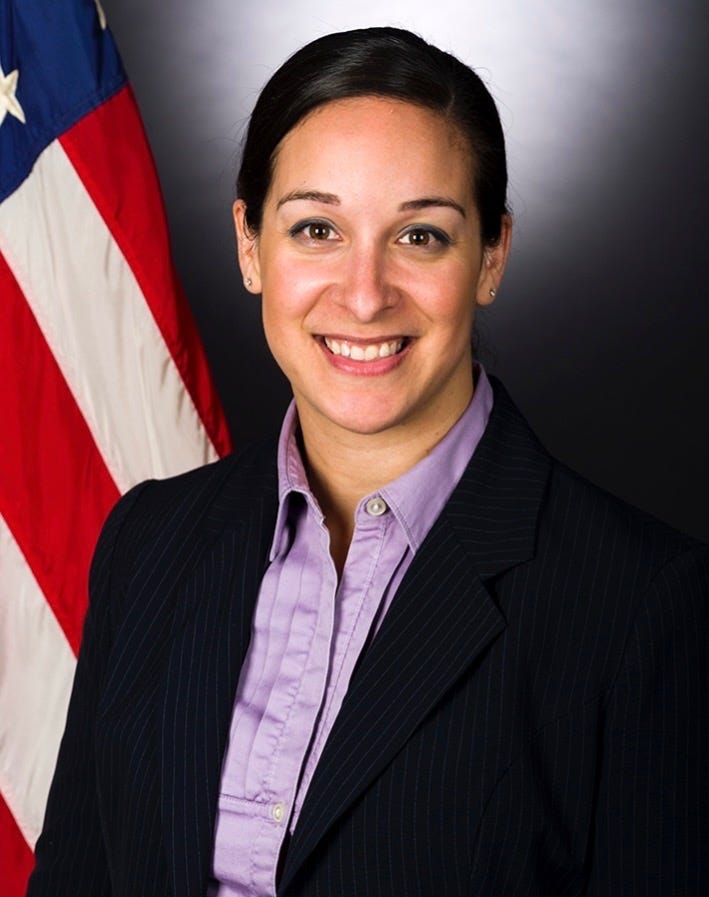
This November, Montana has a chance to tell itself something true. Her name is Alani Bankhead, and if you’re not paying attention yet, you will be — one way or another, by the time the snow flies and somebody’s truck won’t start in the Costco parking lot in Bozeman for the fourth morning in a row.
WHERE THINGS STAND
Let’s be honest about where things stand, because Alani would want it that way. She built her campaign on grassroots dollars, refusing PAC money and dark corporate cash as a matter of principle from day one. That’s not the easy path. It’s the path a lot of people said couldn’t win in modern politics — sort of like trying to merge onto I-90 in Missoula during a Griz home game. Technically possible. Mostly a matter of nerve.
A 5’3” Latina Air Force veteran running on small donations alone, betting that Montanans still respond to a person more than a bankroll.
THE WOMAN UNDERNEATH THE HEADLINES
Here’s what the spreadsheets don’t tell you. Alani Bankhead spent 21 years in uniform doing the kind of work most people only see in movies — running informants in Iraq to hunt senior al-Qaeda leadership, working counterintelligence against foreign spies across Asia, serving as senior bodyguard to a top Pentagon official. She’s third-generation military, going back to World War II. She rewrote the Air Force’s entire counterintelligence war-fighting doctrine last year. Somewhere in Helena right now there’s a woman who used to run informants for a living, and she wants to bring that same relentlessness to a body that currently can hardly agree on what day it is.
But it’s what she did after the spy work that should stop you cold. She built the Air Force’s Internet Crimes Against Children Task Force in Japan. She created Operation KEIKI SHIELD and Operation SHINE THE LIGHT in Hawaii, dragging seventeen different federal, state, local, and military agencies into a room and making them actually cooperate to save kids nobody else was looking for. Seventeen agencies, cooperating. In Montana terms, that’s harder than getting two ranching families to agree on where the fence line goes. She specialized in child sex crimes investigations because, as she’s put it, every kid deserves a shot at their own American dream — and she was willing to get shot at and mortared to give them one.
This isn’t a resume built for a press release. It’s a resume built by someone who has spent two decades being the last line of defense for people who couldn’t defend themselves. Now she wants that job in Washington, which — let’s be honest — could use a few more people who’ve had actual live ammunition pointed at them and fewer people who’ve only ever weathered a rough Sunday show appearance.
THE MONTANA OF IT ALL
Montana didn’t invent the fight against concentrated power that doesn’t answer to anybody — but it has nearly perfected the art of it. A century before dark-money PACs became a fact of American life, the Anaconda Copper Mining Company owned Montana’s newspapers, its legislature, and half its judges, and Montanans got so sick of it they passed the strictest campaign finance law in the country. Montana is the state that sent Jeannette Rankin to Congress before women could even vote nationally, because it has never had much patience for waiting its turn. Montana kept Mike Mansfield in the Senate for sixteen years as its longest-serving majority leader, and Max Baucus for thirty-six years, and a farmer from Big Sandy for three terms — not because they toed a party line, but because they sounded like they’d actually eaten dinner in Montana’s kitchens and could tell a real drought year from a bad hay season.
That’s the Montana that’s supposed to elect Alani Bankhead. Not a Montana that gets decided by whoever spends the most on postcards nobody reads before recycling them at the transfer station. The other Montana — the one that doesn’t trust money it can’t see the source of, that respects someone who’s bled for something, that still believes the person matters more than the letter next to their name, and that has never once been impressed by a stranger showing up in a truck that’s never seen a gravel road.
Picture her at a No Kings rally in Helena, holding a sign that says “Pedo Hunter for U.S. Senate,” and meaning every word of it — because she’s actually done that work, actually gotten those convictions, actually sat with those kids afterward. That’s not a slogan built by a consultant in Bethesda who thinks Montana is one big National Park entrance. That’s a receipt.
THE UNDERDOG’S ADVANTAGE
Plenty of people in the political class have already filed her under “underdog” and moved on to more comfortable bets, the way people abandon a truck with 150,000 miles on it even though everybody living in Montana knows that’s exactly when a good truck is just getting warmed up.
But elections in a state this size aren’t won in cable news green rooms. They’re won in VFW halls in Miles City and diner booths in Culbertson and living rooms in the Bitterroot where somebody’s mother is crying because she can’t make ends meet and somebody’s uncle can’t afford his insulin. Alani has a plan for that — literally: claw back the hundreds of billions in “use it or lose it” defense spending that gets blown on flat-screen TVs every September so the Pentagon’s budget doesn’t shrink, and put it into rural health care instead. She knows exactly how that budget cycle works because she lived inside it for two decades. That’s not a talking point. That’s operational knowledge most senators never acquire in a lifetime in Washington — where, as far as anyone in Montana can tell, “fiscal responsibility” mostly means arguing about it on television.
WHAT THIS ACTUALLY REQUIRES FROM MONTANA
A campaign built on grassroots defiance doesn’t flip a Senate seat by accident. It flips it because enough people decide the underdog was right all along.
So here’s the assignment, Montana, and it isn’t complicated:
Give what you can, even if it’s small — especially if it’s small. She’s rejecting PAC money on principle. That principle only survives if regular Montanans replace what the big spenders would have put in. Skip a couple rounds at the bar, and put it toward something that’ll actually still be standing next November.
Show up in the room, not just the group chat. Phone bank. Knock doors. Drive to the town two hours away where nobody’s bothered to show up in years, because that’s exactly where she’s trying to go — and where the pie at the diner is better anyway.
Tell her story before someone else tells a worse one. Not the fundraising numbers. The actual woman — the one who ran informants against al-Qaeda, built task forces to save trafficked kids across three continents, and decided that after all that, the next fight worth having was for Montana’s kitchen tables.
Refuse the self-fulfilling prophecy. “Underdog” only stays “underdog” if enough people believe that’s the whole story and stay home. Don’t let anyone else’s low expectations write Montana’s ending — this state has never much cared what outsiders predicted about it, and there’s no reason to start now.
Montana has flipped seats before, every time this state decided a person mattered more than a party letter or a bank account. Somewhere out past the Bitterroots and the Bear Paws, there’s a version of November where Alani Bankhead stands in front of a crowd in Helena and Montana proves, one more time, that it still knows the difference between money and trust.
I really want someone this amazing in Oregon. If Montana is smart, they will elect her.
Love this. We need more leaders with integrity❤️