
CALI OVERS VS. THE WAREHOUSE
A high school senior took on a $38 billion detention strategy and made it wobble


The warehouse is still standing. It’s still sitting there at the corner of Waddell and Dysart roads, 418,000 square feet of beige industrial nothing, baking in the Arizona sun across the street from a chemical facility full of enough hazardous material to kill everyone within a quarter mile. The Department of Homeland Security still owns it. GardaWorld’s contract is still technically alive.
But the work has stopped.
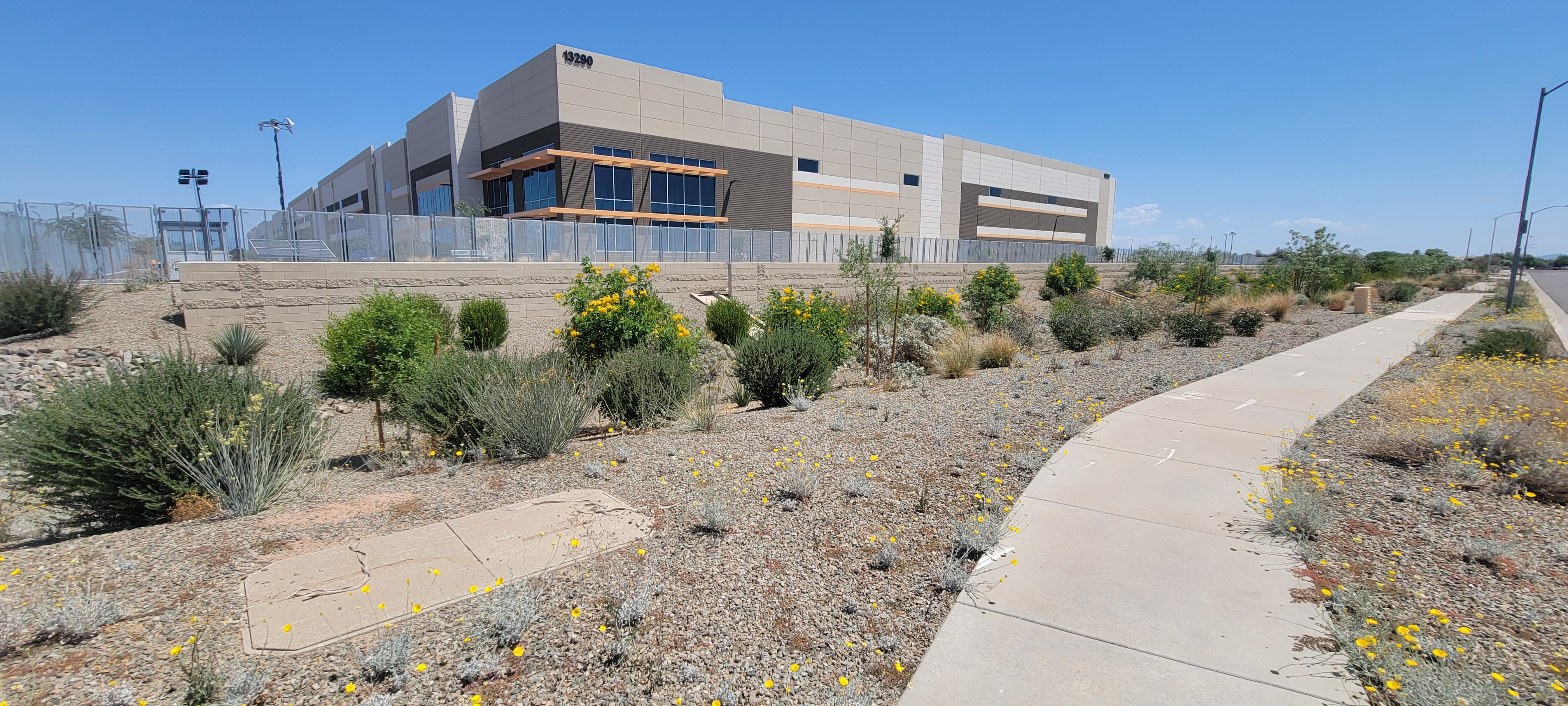
A stop work order was issued to GardaWorld last week, buried in the federal spending database at USAspending.gov with no explanation attached. No reason given, no timeline for resumption, just a quiet bureaucratic notation that something, somewhere, had gone wrong for the people in charge. And now Axios is reporting what the residents of Surprise had already begun to suspect: DHS is evaluating whether to walk away from the entire warehouse detention program. Not just Surprise. All of it. Twenty-four warehouses across the country, a $38 billion vision of industrial-scale human caging, and the whole apparatus is wobbling.
The federal government blinked.
It didn’t blink because of a court order, though AG Kris Mayes’ lawsuit, filed April 24th, didn’t hurt. It didn’t blink because of a congressional intervention. The Democrats who represent this community sent a strongly-worded letter and called it a day. It didn’t blink because Kevin Sartor grew a spine. It blinked because the people of Surprise, Arizona made it politically, logistically, and legally untenable to do anything else, and none of them fought harder, or more visibly, than a seventeen-year-old kid named Cali Overs.

Cali Overs is a senior at Dysart High School, Student Body Vice President, and approximately one mile from the warehouse as the crow flies. She is also the person who, when the federal government purchased a building in her city to use as a mass detention facility for up to 1,500 human beings, did not wait for an adult to handle it.
She circulated a petition. She showed up to city council meetings. She testified. She organized. And on April 24th, she stood in front of that warehouse next to the Attorney General of Arizona and told the press what it was like to watch her classmates become afraid of their own neighborhood.
“Many students have told me that they’re too scared to go past this area,” Overs said, “and are switching to online classes.”
That’s not a political talking point. That’s a seventeen-year-old describing the specific texture of dread that descends on a community when the government turns a building near your school into a detention center. Not a rumor of one, not a zoning proposal, but a done deal, a $70 million cash purchase executed without a single phone call to local officials, without an environmental review, without so much as a courtesy heads-up to the city council member who found out about it from a reporter.
Dysart High School’s student body is over 60 percent Hispanic. The warehouse is half a mile away. The math is not complicated.
The federal government’s strategy, in Surprise as in every other city where it pulled this move, was speed. Buy fast, contract fast, build fast, and present the community with a fait accompli before anyone could organize a response. It worked in other places. It did not work here.
Community members packed city council meetings from the moment news broke in late January. One meeting drew over a thousand people. They filled the room, spilled into the hallway, stood outside in the parking lot, and made it clear that this was not a controversy that was going to quietly dissipate. Northwest Valley Indivisible worked the attorney general’s office for months, meeting twice with staffers, pushing the legal case. Brent Peak of NWV Indivisible had the particular satisfaction of watching it pay off, though he kept his victory speech characteristically dry.
“An MOU (Memorandum of Understanding) isn’t worth the paper it’s written on,” he said, back when the mayor was still promising written agreements with DHS would solve everything.
The legal architecture that’s boxing DHS in was built in Maryland first. A federal judge there issued a preliminary injunction on April 15th, finding that ICE had not taken the “hard look” at environmental consequences required by the National Environmental Policy Act, and that the agency’s claim to a categorical exclusion from that law didn’t hold up when the project involved converting an industrial warehouse into a facility housing hundreds of people. Arizona AG Mayes pointed directly at that ruling when she filed her own lawsuit nine days later.
The NEPA argument is good. The INA argument, that the Surprise facility is not and will never be an “appropriate” place to detain human beings, as the law requires, is arguably better. The warehouse is directly across the street from Rinchem, a chemical storage facility handling materials used in semiconductor production. The hazmat warnings are visible from the road. Mayes stood in front of them at her press conference and gestured at two large chemical tankers idling at the curb like props that the government itself had helpfully provided.
“Let this sink in,” she said. “The federal government wants to open a jail inside a documented chemical hazard zone.”
ICE’s response was to say this wasn’t really about the environment.
Which is technically true.
It’s about a lot of things.
It’s about a government that bought a warehouse without telling the city. It’s about students switching to online school. It’s about what happens when you try to build a machine that processes human beings at industrial scale and you forget that the human beings aren’t the only ones with something to say about it.
None of this is over. The warehouse is still there. The contract is still on the books. DHS has not officially announced it’s abandoning the project, only that it’s “paused” and “evaluating.” The federal government has a long history of pausing things and then quietly resuming them once attention drifts elsewhere. The lawsuit is still working its way through the courts. The stop work order has no stated expiration.
But something has shifted.
The broader warehouse detention program, all 24 facilities, the entire $38 billion architecture of it, is now described by sources close to DHS as a plan under review, with discussions underway about selling properties back. CoreCivic, one of the country’s largest private prison operators, is in talks to sell the agency “turnkey” facilities instead. Existing detention infrastructure, already built for the purpose, no retrofitting required. The warehouse gambit, the whole audacious vision of converting America’s surplus industrial real estate into a nationwide detention network, appears to be failing on the merits.
Closer to the Edge is a reader-supported publication. If this piece matters to you, please share it.
She’s going to make a great leader!
Wow, just wow! To know through the actions of this young woman that there is hope for future initiatives by the next generations taken for the sake of fairness and equality is enough to make my heart soar. I offer my great respect to Cali Overs and thanks to you as well for sharing this ❤️