
DAY ONE: MIAMI OPENS ITS MOUTH AND SHOWS ITS TEETH


Day One began with a small but necessary humiliation. I walked out of the airport through Departures, not Arrivals, like a man subconsciously trying to escape before the story could clamp down on his ankle. Miami corrected me immediately. Airports love this part. They’re monuments to human confidence and specialize in the quiet joy of watching it collapse.
I doubled back, properly chastened, and eventually Jose and Chance materialized the way allies always do, without ceremony, just presence. Chance had driven down from North Carolina, already committed to the road ahead, already vibrating with the kind of energy that bends probability. His own car, we would later learn, had been totaled while parked, which is the sort of fact you either ignore or treat as a warning shot from the universe. For now, though, Jose drove his Jetta, cool and contained, sparing us the borrowed SUV with no air conditioning that loomed in our immediate future like a punishment still being processed.
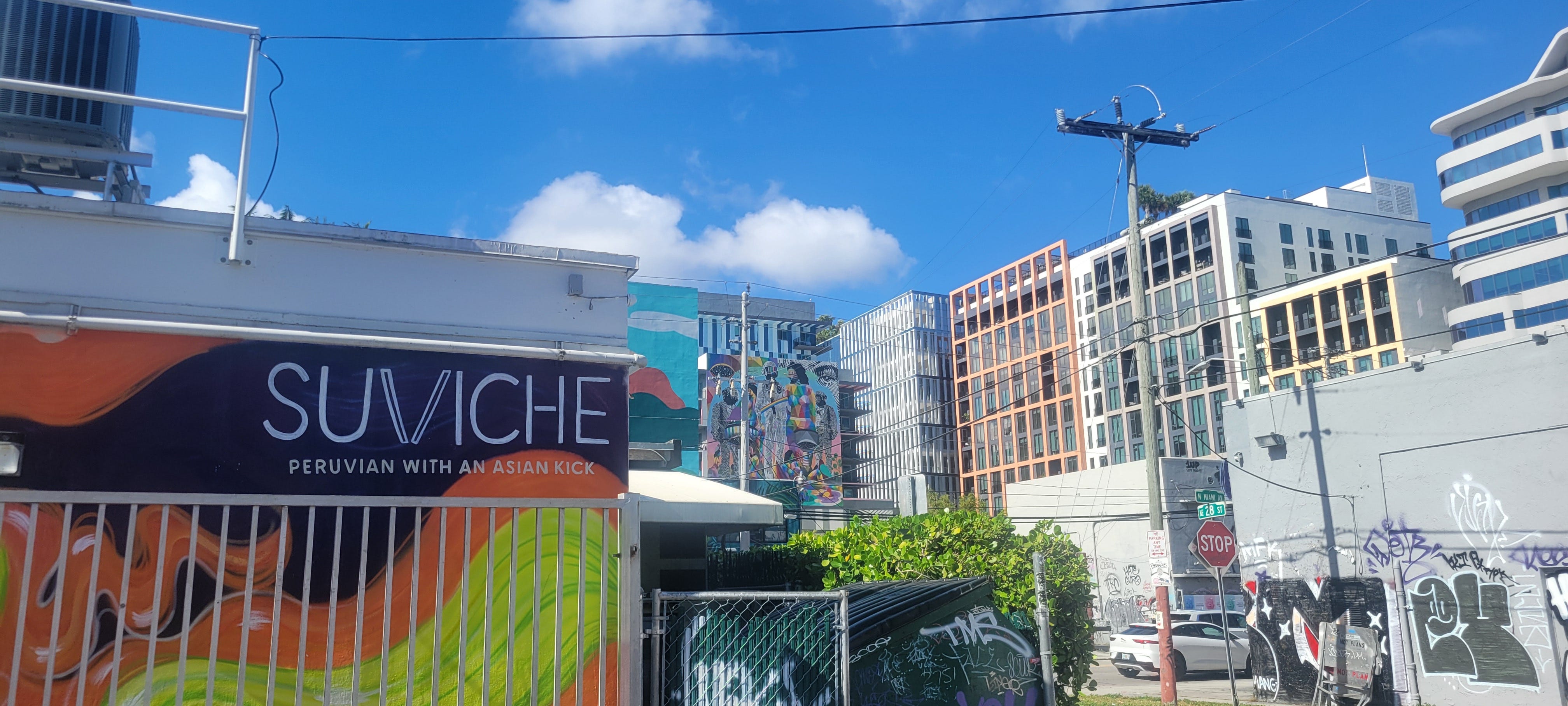
We went to SuViche, up on North Miami Avenue, just north of the art districts and just south of consequence. This was the borderland. Traffic too fast, patios too close, scooters moving with the confidence of people who believe in luck. SuViche advertises Peruvian with an Asian kick like a dare, and Miami respects that kind of honesty. I ordered a Bloody Mary because it felt thematically correct. Salt. Heat. Violence disguised as refreshment.
Conversation drifted, as it does, to Chance’s car. Specifically, how it had been destroyed while standing still without anybody being held accountable, which led to my entirely reasonable theory that Chance’s inebriated spirit left his body while he was passed out in Las Vegas, reached across time and space and knocked his own vehicle out of existence. And the exact second I said the word Vegas, the city intervened.
A minivan smashed into a guy on a moped.
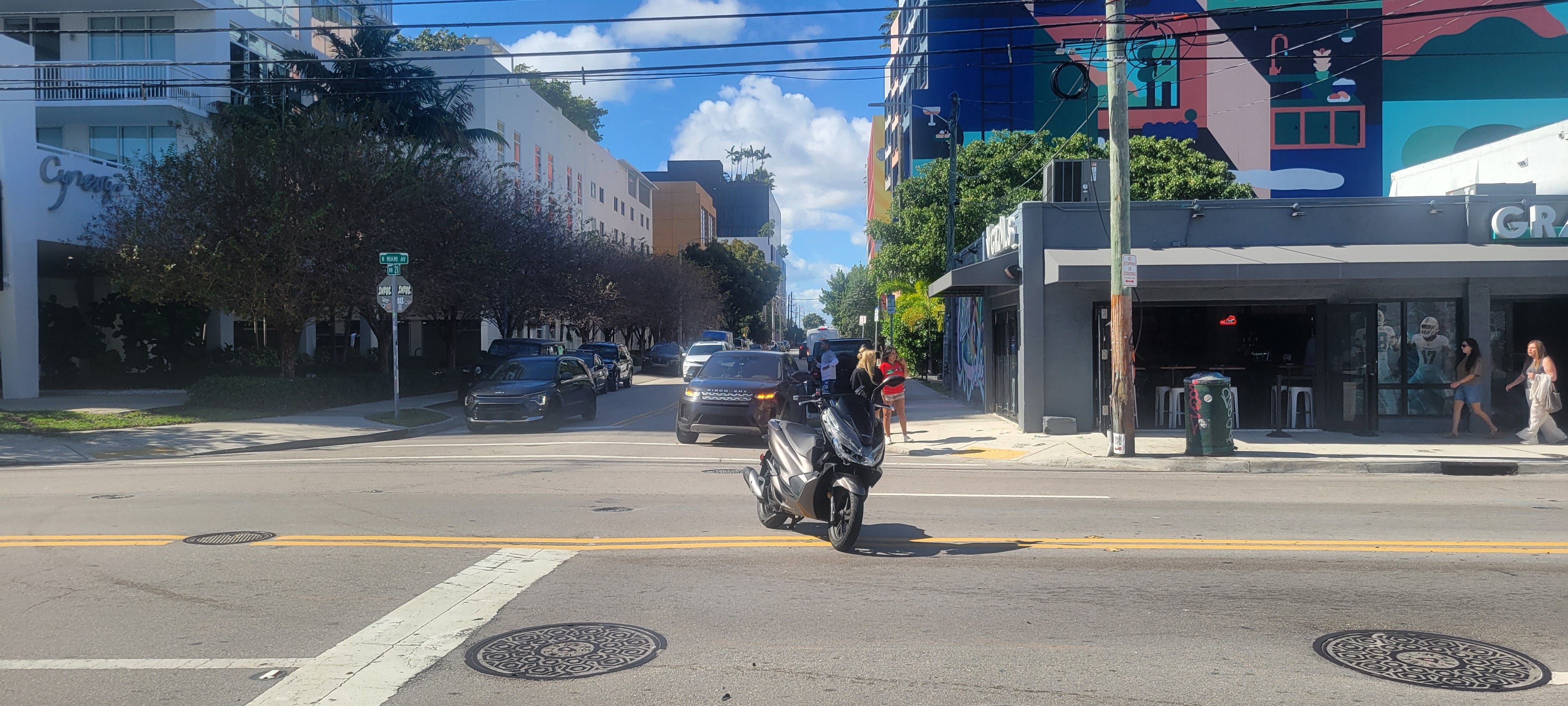
Right there. At the intersection in front of the patio. No buildup. No narrative ramp. Just the sound metal, momentum, and everyone inhaling at once. Miami didn’t wait for symbolism to ripen. It staged the warning directly in front of us like a director who hates subtlety and worships timing.
Everything froze, then surged. Someone shouted. Traffic rearranged itself. The man was alive. Help arrived. The street absorbed it and kept breathing. But the message was clear. Miami had heard our conversation and decided to participate. This city does not sit quietly while you speculate. It responds.
We left that table quieter than we arrived and went looking for perspective, which is what humans do when reminded how thin the margin is. The Miami Beach Botanical Garden gave us green order and the illusion that growth is gentle. Shade. Water. Plants doing what they’re supposed to do without commentary. It slowed the pulse just long enough to feel it pounding.
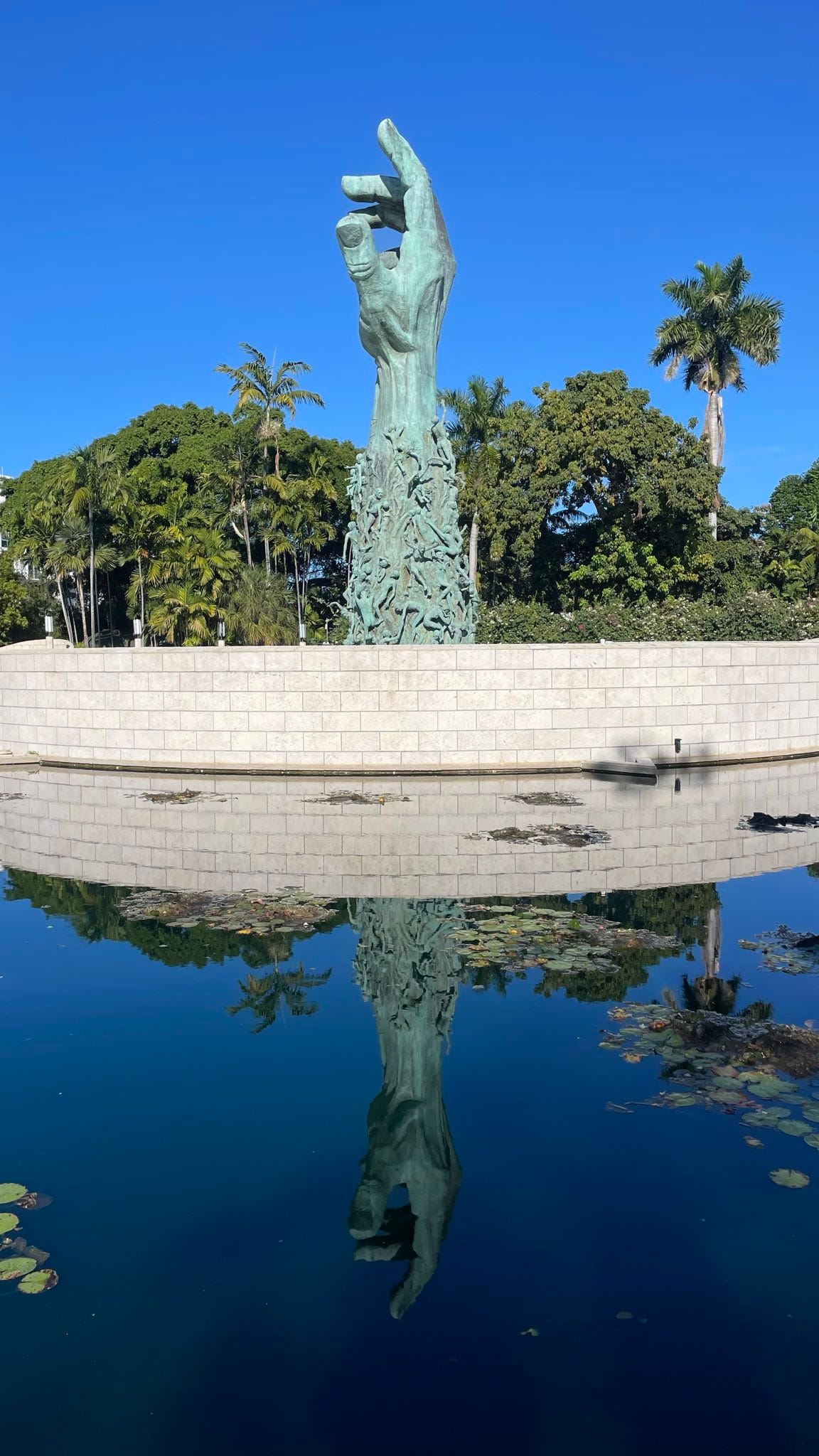
Right next door stood the Holocaust Memorial, which exists to ensure you don’t confuse calm with comfort. The towering hand. The bodies climbing it. Names carved into permanence. Silence heavy enough to press back. The transition is violent and necessary. From life insisting on itself to memory refusing to be buried. Miami sunshine doesn’t soften that place. It sharpens it.
By the time we got back to the Jetta, the light was slipping. That’s when the city changed tone.
Jose drove us to Wynwood, just north of Downtown Miami.
At night, Wynwood stops pretending it’s a neighborhood and becomes a condition. Murals glow like they’re radioactive. Bass leaks through concrete. Neon buzzes with intent. We wandered until the city decided we’d earned the next act and funneled us into Wynwood Marketplace, strings of lights overhead, music pounding, people moving like tomorrow was optional.
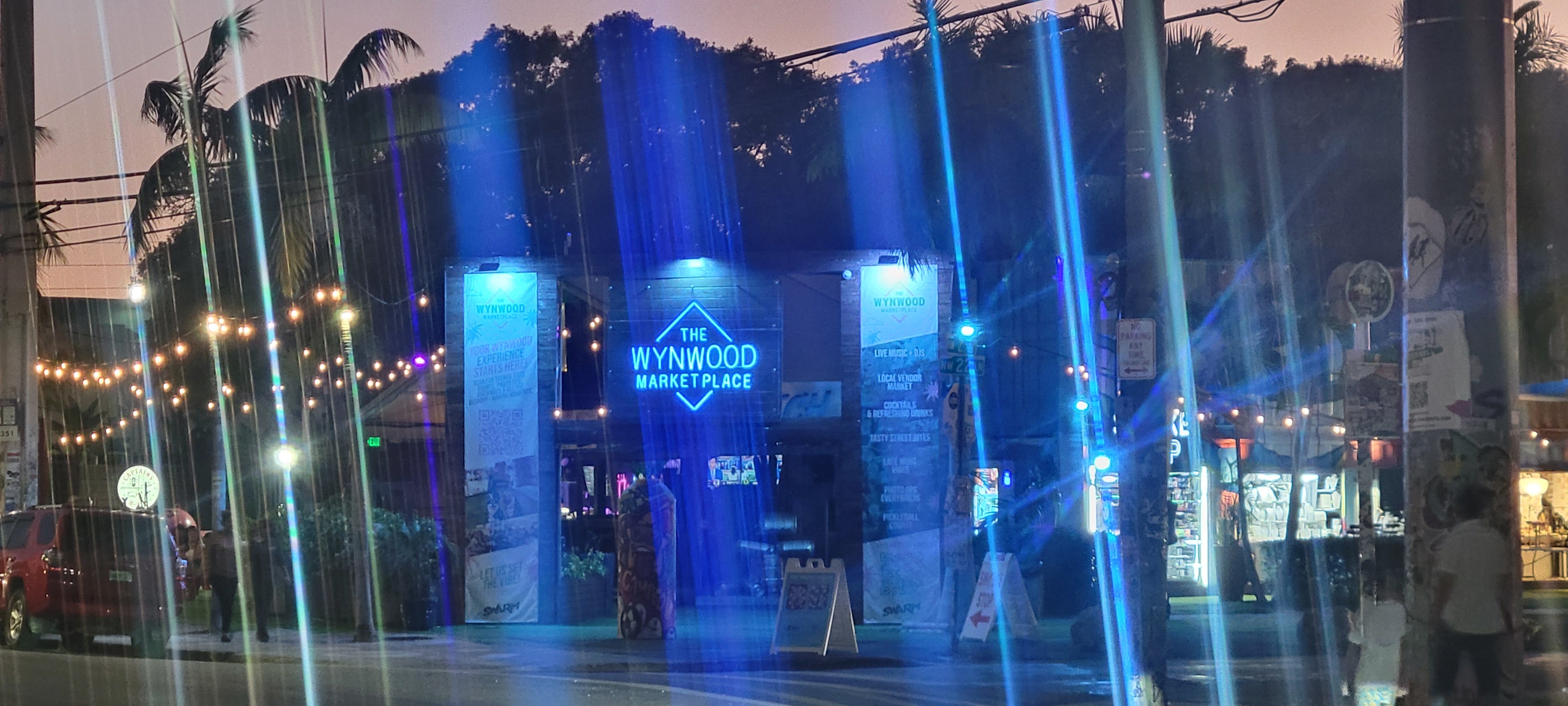
At night, Wynwood Marketplace feels like a controlled burn. Festive, feral, loud enough to drown out your thoughts if you let it, honest enough to expose them if you don’t.
We floated the idea of seeing a jazz band, because humans are pathological liars about stamina. Reality intervened. I didn’t need more sound. I needed sleep. Miami would keep going without me. It always does.
Day One ended sprawled on Jose’s couches, bodies horizontal, minds still humming. No hotel. No ceremony. Just exhaustion, heat, and the unmistakable sense that the city had finished its introduction.
Wrong door. Bad timing. Sudden violence. Memory carved in stone. Neon distraction. Borrowed furniture.
Miami hadn’t shaken my hand.
It had shown its teeth.
Message received.
This trip is happening whether it’s sensible or not. Rook T. Winchester and Chance Meeting are driving from Miami to Chicago with notebooks, cameras, a questionable vehicle situation, and a commitment to seeing America up close. If you want this road reporting to stay alive and weird and unsanitized, becoming a paid subscriber is how you throw fuel in our tank.
 | A guest post by
|
 | A guest post by
|
Shouldn’t there be a warrant out for the arrest of Jonathon Ross based upon his own cell phone evidence? And warrants for every other ICE agent present as accomplices?
THE COMMON GOOD MANIFESTO
A society built for people, not predators.
We are at our best when we invest in each other.
We are at our worst when we abandon the vulnerable.
This manifesto is how we return to the common good.
I. DIGNITY AND JUSTICE
1. Release the Epstein files — full transparency, no exceptions.
2. Impeach, convict, and imprison Donald Trump and every handler who enabled his corruption.
3. No federal office for any convicted felon.
4. End the weaponization of the justice system against the poor, immigrants, LGBTQ people, and marginalized communities.
II. DEMOCRACY THAT ACTUALLY WORKS
1. Abolish the Electoral College — one person, one vote.
2. Abolish ICE — replace it with humane immigration policy that honors human rights.
3. Ban gerrymandering with a standardized national apportionment method.
4. Two-term limits for every elected office.
5. Mandatory retirement at 70 for all elected officials.
6. Paper ballots only — end the era of hackable voting machines.
III. AN ECONOMY THAT SERVES PEOPLE
1. Restore 1950s-style progressive tax rates — when America was prosperous and fair.
2. Overturn Citizens United — corporations are not people.
3. Eliminate the Social Security payroll cap and tax capital gains for Social Security contributions.
4. $25 minimum wage indexed to inflation.
5. Medicare for All, one unified system — no A/B/C/D maze.
6. Congress receives Medicare, not boutique private insurance.
IV. WORKERS, CREATIVES, AND PUBLIC SERVANTS
1. Big pay raises for social workers, teachers, librarians, artists, and cultural workers — the people who actually hold society together.
2. Universal childcare — because families are the foundation of the nation.
3. Free public university education.
4. Full forgiveness of all student debt.
V. CLEAN GOVERNMENT
1. Root out corruption at every level, starting at the top.
2. Full financial transparency for every elected official, appointee, and senior bureaucrat.
3. Ban lobbying for former officeholders for life.
VI. THE FUTURE WE CHOOSE
We choose a country that values:
• Compassion over cruelty
• Community over greed
• Truth over propaganda
• Shared prosperity over billionaire hoarding
• Democracy over minority rule
• Human dignity over corporate profit
We choose a nation where the common good is not a slogan, but the organizing principle of public life.
And we refuse to apologize for demanding better.
I live in Florida , i love visiting Miami and kicking around for sure. In a creeping way you nailed it. It nailed you, walking wounded, looking for salvation and sustenance