
ENTERING AN AMERICAN CONCENTRATION CAMP
My Visit with Martin Soto at the Elizabeth NJ Concentration Camp


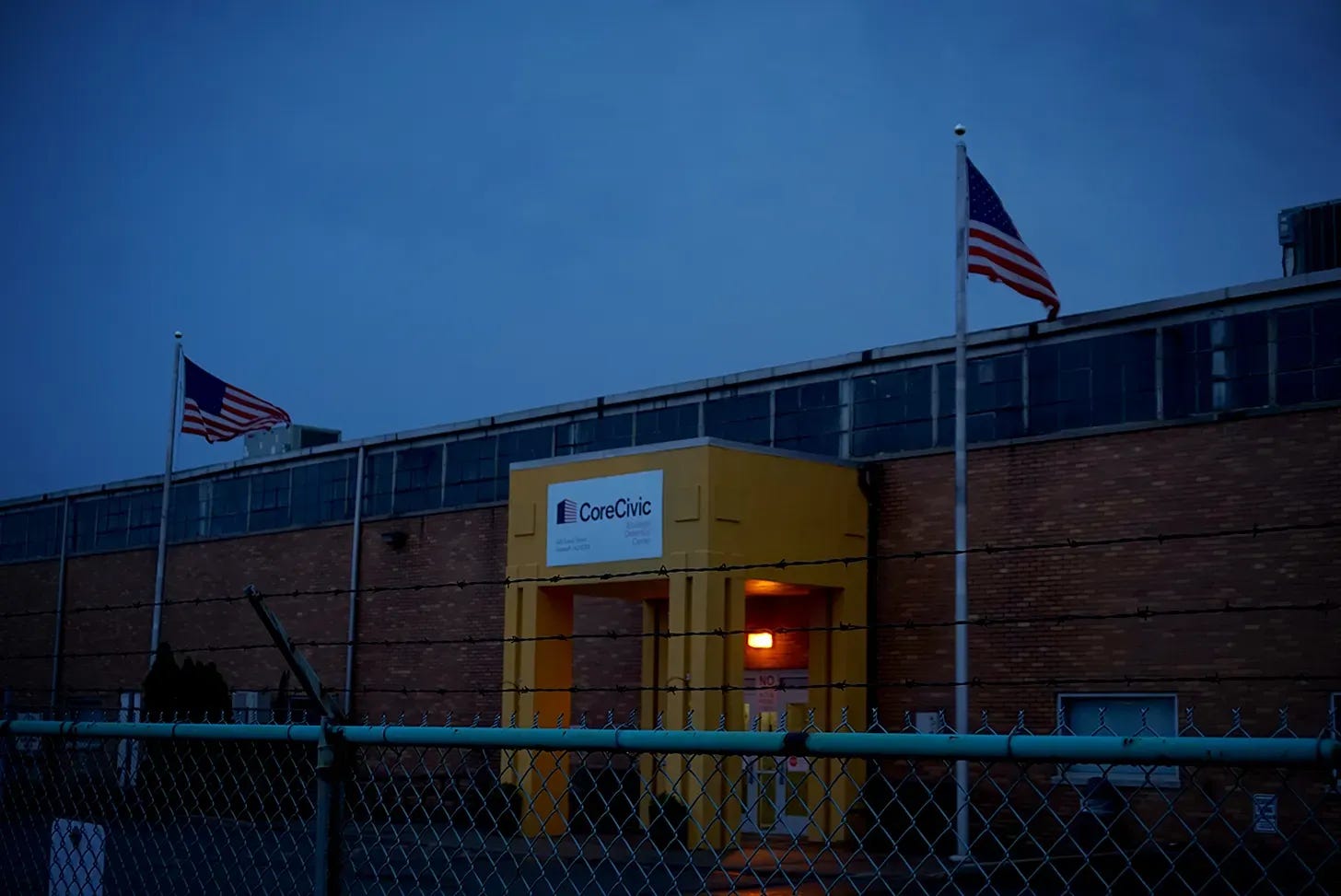
For almost two months, Martin Soto has been in solitary confinement in the Elizabeth Concentration Camp in New Jersey. Before being transferred there, he led a hunger and labor strike in Delaney Hall so effective, it made national news and spawned weeks of large-scale protests. For it, they punished him and painted him a criminal.
When Gabriela asked me if I wanted to join her during visitation and speak to Martin, I immediately said yes.
I had my doubts they’d let me in. Just the night before I had been outside taking pictures of the facility with Matthew Wagner and some others when a guard resembling a human rendering of Jabba the Hutt started yelling at us that we were on private property and had to leave. I asked where the signs were and what ensued was an argument turned lobbing of insults between me and Jabba before the police came to mediate.
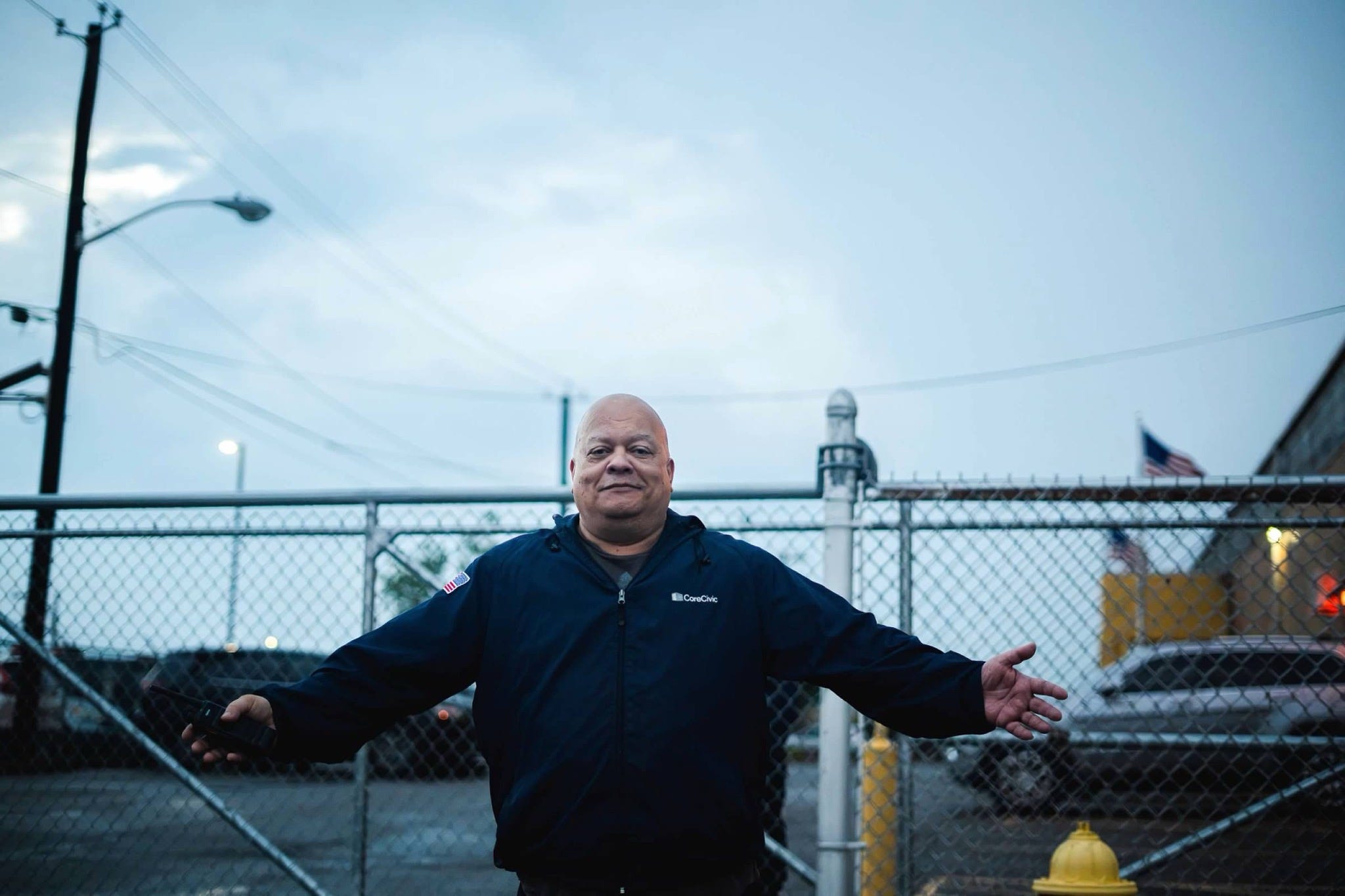
Throughout the argument the guard called us “terrorists,” threw out the f-slur, and told us to “come to the country legally.”
A tirade all to demonstrate how protective he was of his job at the concentration camp where innocent people, many of whom had gone through the legal pathways to be in this country, were held in indefinite detainment for the profit of the billion dollar corporate machine he was proud to be a cog in.
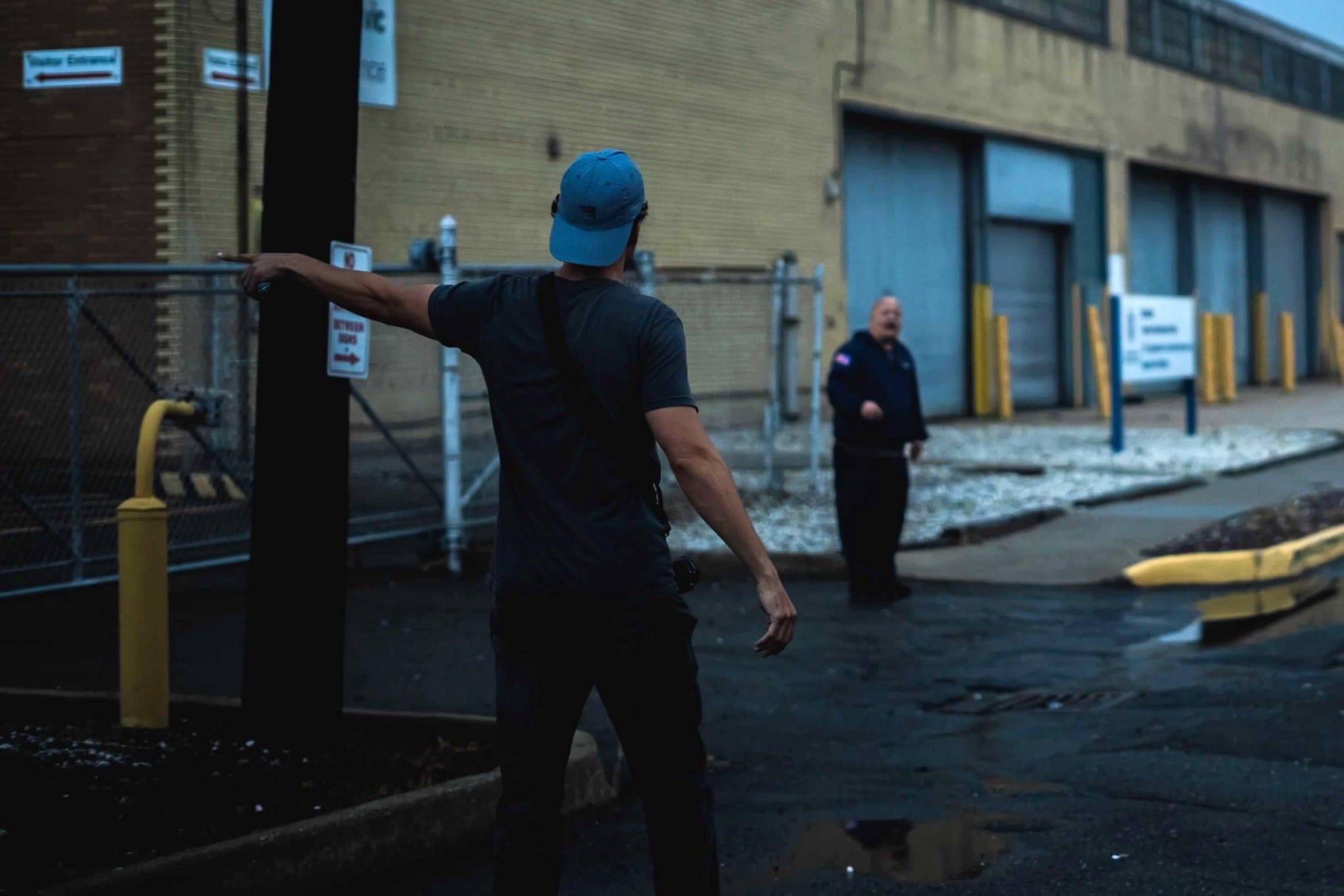
We spoke to the cops, and were told we were well within our right to stay on the street and take pictures. Though we were free to go, with the altercation and the arduous process of gaining visitation Gabriela explained, I had little faith they’d allow me to join her.
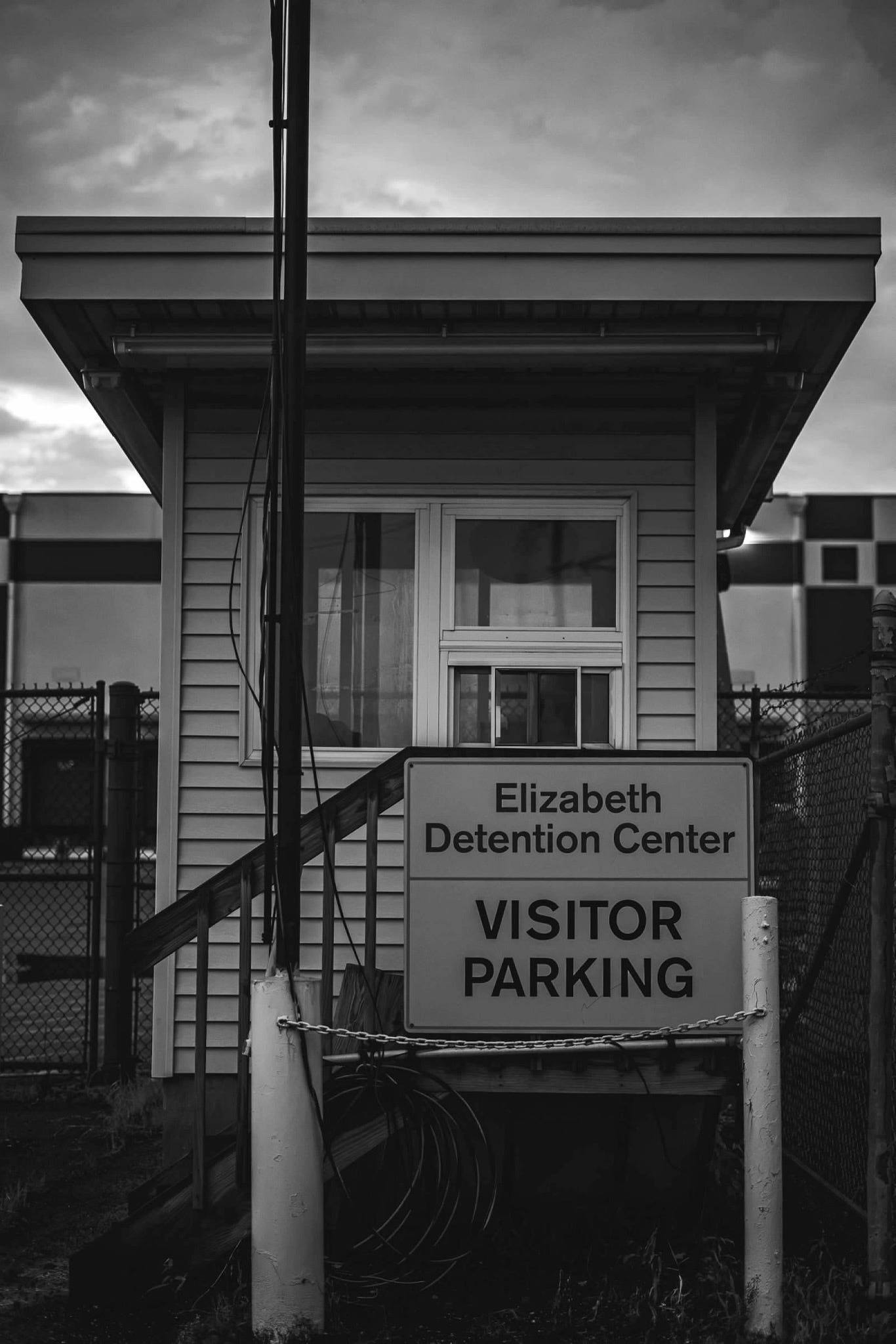
Gabriela had her visitation revoked before as retaliation for speaking to media when Martin was still in Delaney Hall. This being a constant fear, we ducked between two FedEx trucks down the road from the Elizabeth concentration camp to conduct our interview. Trying to keep a low profile as ICE and CoreCivic employees drove by, we talked for about an hour.
As we spoke, Air Force One flew right over us, landing just in time for the start of the World Cup Finale happening only thirty minutes away.
But while the World Cup Finale distracted millions, tens of thousands of innocent people were still being held in concentration camps in the United States.
We sat outside the door of the Elizabeth one, as families gathered around phone screens to watch the championship soccer game, while waiting to visit with their loved ones.
Gabriela did this every day. A mother of two young children and pregnant with a third, she drove to the concentration camp each morning, as early as 10 am, to wait all day for a visitation that started at 7pm.
See, they only give out an arbitrary 11 tickets for visitation and its first come first serve. If you aren’t given a ticket, then you aren’t getting in. And it’s always based on the guards own discretion. They could withhold a ticket from someone simply because they felt like it and give it to someone else who may have come later. After the tickets are handed out, anyone else is turned away.
Every day Gabriela shows up early to check in and all day she waits in the parking lot to see if she’ll be given a ticket to see her husband.
At least the tickets are per detainee, not per person. So technically if I was allowed in, we would be on the same ticket.
After our interview I went back to Delaney for a few hours. There, GEO Group employees laughed at children who cried outside the gates after they were denied visitation with their loved ones. The employees of the concentration camp antagonized Liz, one of Owl Media’s photographers who took some of the photos for this article. They called her the C-word and threatened to break her camera.
By 6pm I went back to Elizabeth to see the guard there hand out the tickets for visitation. I walked up to the doors of the facility and saw the parking spots marked specifically for ICE agents. It filled me with profound disgust to see ICE vehicles parked there and knowing I’d have to bite my tongue in order to preserve my opportunity to make it inside.
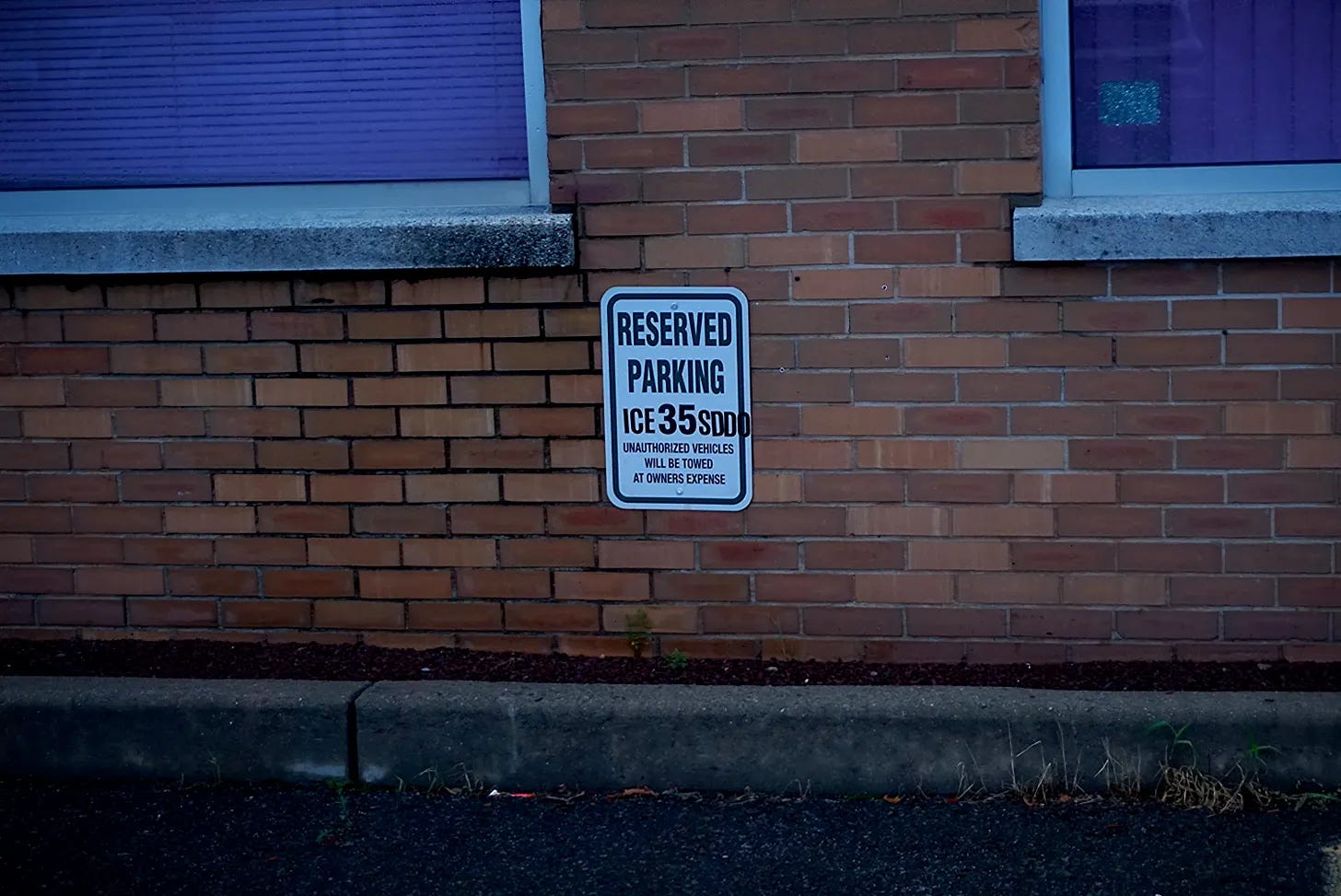
I couldn’t imagine what it’s like for Gabriela and others to have to see these violent oppressors every day and be cordial with them only for the chance to speak with their loved ones for a mere hour.
The employees at the majority of these concentration camps are largely people of color. Those ignorant to their direct compliance in a violent system of white supremacy. Acting against their own interests and well-being in order to obtain a momentary check. Who needs a soul when you have a salary and benefits? Even at the expense of a collective future.
Gabriela was approved for visitation, receiving her ticket. No it was my turn to see if I could accompany her.
We walked inside the building. Rows of chairs beside a wall of lockers populated the entry room along with a small television from decades-past that hung in the corner playing a fuzzy livestream of the World Cup.
We walked up to the check-in window where an older black lady sat carrying an ever-present rude demeanor. She spoke to each individual with contempt and refused to make eye-contact until she checked to match your face with your documentation.
She took my ID and asked my relation to the detainee. I said “family friend” and hoped it was the right answer. She took a moment to carefully read the shirt I had on. I knew they had turned people away from wearing anything political before, but my shirt merely said “Being offended is a choice. Must be nice to still have one.” I guess she found that innocent enough.
They approved me and we went outside once again to wait.
Families waited outside with us. We saw a few turned away. More families exited the building from the women’s visitation that happened an hour prior. Many of them left crying with their heads held in their hands.
It was about 7:30 when we were allowed inside. I couldn’t bring anything. No cell phone. No recording device. No pen and paper. Not even my hat.
They held my ID for the visit and I hoped they weren’t running an extensive background check and come to the conclusion that I was an Antifa infiltrator.
We walked through a metal detector and filed into a small room with a locked door on the other side. Once everyone was in, they closed the door we entered through before the other door unlocked and slid open.
We entered a white room with round tables and windows with seats on either side where people could meet with their loved ones.
Gabriela ran to Martin’s embrace. A hug that harbored the heavy weight of being without. Even though she came every day for visitation, the time in-between must have felt like eternity.
I strayed behind, allowing them a moment before introducing myself. He came to shake my hand and then we sat down. Gabriela translated for us as we spoke.
For an hour he told me of his experiences. Of the hardships. Of enduring the terror of his captors and the long silences and stares at blank walls that plagued his waking moments in solitary.
He painted me a picture of constant psychological torture. One where you never knew when you’d face the ire of the guards. If a guard was having a bad day, it would be taken out on detainees.
Every once in a while he’d give us a signal to be quiet while looking over our shoulders. The guards kept sending glances our way and he was worried they’d hear our discussion.
I asked him about his unit in Delaney. What it was like being processed and what were the conditions inside.
In February, he was kidnapped by ICE while on his way to buy diapers. They screamed at him in English and he couldn’t understand what they were saying. The agents got frustrated, threw him into a van and carted him to Delaney Hall where he was shoved into a cold room shoulder to shoulder with others being processed. A process that could last longer than an entire day.
During processing, they were asked a myriad of questions, almost as an interrogation. Then they were separated by race, nationality, and religion and placed into their units.
The unit was an environment they kept extremely cold, and some nights would keep the lights on to deprive them of sleep. Sometimes the guards would bang on their walls just to startle them. Female guards had been transferred to other units after beating some of the male detainees.
I asked him how the strike in Delaney began to form. He told me it was because of the conditions. The strike didn’t start all at once. Over time, detainees grew tired of poor treatment. They were forced to work twelve hour shifts for a dollar each day. One day Martin had the flu and was still forced to work over eight hours and given a little over fifty cents for not completing his shift. More and more food they were given was moldy. Each day passed and conditions worsened. It wasn’t just for lack of care, but what seemed like purposeful cruelty.
Detainees began by getting together in smaller groups wondering what could be done. They complained to the guards and administrators, asking for better quality food and treatment. Administrators nodded, saying they’d take their complaints into consideration.
That’s when detainees were given a tray of worms. Not worms finding their way into their food from poor storing. A tray with the usual side items, but in place of their main protein, a pile of worms for each and every one of them.
That’s when they knew the strike was necessary. They no longer gathered in small groups, but a much larger one. Lead by Martin, they withheld their labor and refused to eat in solidarity with one another.
I asked him if anyone in his unit opted out of the strike.
“No,” he said plainly, shrugging, as if the notion was something that never crossed his mind or the mind of the others.
Outside Delaney, large protests built after reports of the conditions came out.
Gabriela spoke to media. Because of the strike happening inside, and they protests happening outside, they were subject to ICE’s intimidation tactics.
A guard barged into Martin’s cell berating him in English, telling him to tell his wife to call off the protests and stop talking to the media.
When Gabriela came for visitation, the guards pulled her to the side, wasting much of her visitation time to tell her to do the same.
He told me of how once the protests started, ICE came to their units and threw tear gas and flash-bangs in before closing the door.
Intimidation did not sway the detainees. The strike continued. Groups protected Martin inside, making sure he was never alone to be singled out by the guards.
So one day, guards told Martin he was going to be released. He called Gabriela and told her the news, but she wasn’t so sure. She went into Delaney to visit him and saw as they grabbed Martin and shoved him into a van.
She kicked and screamed as they held her inside against her will and she watched as they kidnapped him once again and drove him away.
He was transferred to the Elizabeth Concentration Camp, just 15 minutes away and has been in solitary confinement there ever since.
Martin never committed a crime. He’s married to a US citizen and they have children together. He has his paperwork and was going through the legal pathways of citizenship. He was wrongfully imprisoned in a concentration camp. And then he was placed into solitary confinement for wanting to be treated humanely.
They saw his effective organization as a threat. They saw solidarity amongst human beings as a problem to be squashed. They saw his humanity and did everything in their power to break it. To make him feel alone and powerless.
But the man I met inside Elizabeth is anything but alone and his power resides in his resilience. In his unrelenting positivity. In the strength he carries as waits for the day he can be reunited with his family.
The media tries paint him as a flight risk, a danger to his community just to justify the inhumane treatment he’s subject to. But he’s done more to bring community together from the inside of a concentration camp than local politicians could ever from their podiums.
Martin Soto remains in solitary in the Elizabeth concentration camp. His wife Gabriela continues to fight every day outside for his release as she takes care of their family.
If you’d like to help them you can donate to Gabriela’s venmo: gabrielasoto-ve / The last four of her number is 3179 if needed.
You can also sign the petition for his release here.
 | A guest post by
|
I am grateful you named them "concentration camps." The dehumanitation, settings, physical abuse, and every other description of the long ago camps was exactly on target. How does this happen in our country? Why can't we stop it? Storm the camps, exchange guards for prisoners, and demand these deplorable, inhuman properties should not be supported by my taxes.The next time the president has a news conferance, I would like journalist after journalist to ask the question: Mein Fuhrer (oops), aren't you ashamed that your administration has allowed these concentration camps to hold human beings. You are in real estate. You will never be permitted to be a member of NAHB Your children, grandchildren will be cursed from kindergarten to high school. Shame on Trump. Shame on Republicans. Shame on his supporters.
It's all so dreadful. So unAmerican. They incarcerate people but what is the goal? Until they're processed and can be deported? Is it confinement with no end? It doesn't make sense.