
FREE ARMELLE BRADSHAW

Armelle Bradshaw did what America keeps telling immigrants to do.
She showed up.
On August 12, Armelle and her husband, Terrance Bradshaw, walked into a federal immigration office for a scheduled interview connected to her marriage-based green-card process.
She wasn’t hiding. She wasn’t running. Nobody had to find her.
The government told Armelle where to be, and Armelle trusted the government enough to go there.
ICE arrested her.
Terrance walked out without his wife.
Their 19-month-old son, Benir, is now without his mother.

Armelle came to the United States with her family in 2013. She was nine years old. She grew up here. She went to school here. She graduated from Waggener High School in Louisville, went to college, married Terrance, a United States citizen, and became a mother.
She also spent years showing up for other people.
Armelle helped found Future Ancestors, the youth organization behind Race4Justice honoring Breonna Taylor. Louisville news organizations were covering her community work years before anyone had reason to know her immigration status. As recently as May, she appeared on Louisville television promoting the 2026 Race4Justice.
Now she’s sitting in detention in Jeffersonville, Indiana.
And there is something deeply disturbing about how she got there.
For years, America has told immigrants to follow the process. Fill out the forms. Attend the hearings. Keep the appointments. Come through the front door.
Armelle came through the front door.
ICE was waiting on the other side.
Think about what that teaches every immigrant family watching this happen.
Think about the mother who receives her next appointment notice. Think about the husband driving his wife to USCIS. Think about the child sitting in the back seat. Think about what showing up means after Armelle.
A government cannot demand trust while teaching people to fear the moment they comply.
And somewhere underneath all of this is Benir.
He’s 19 months old.
He doesn’t know what USCIS is. He doesn’t know what ICE is. He doesn’t understand petitions, hearings, appeals, detention facilities, or federal immigration policy.
He knows his mother.
He knows her face. Her voice. Her arms. The person who has been there since the beginning of his tiny life.
And now she isn’t there.
Government has wonderfully clean words for things like this.
Detention.
Enforcement.
Removal.
A 19-month-old has simpler language.
Mommy isn’t home.
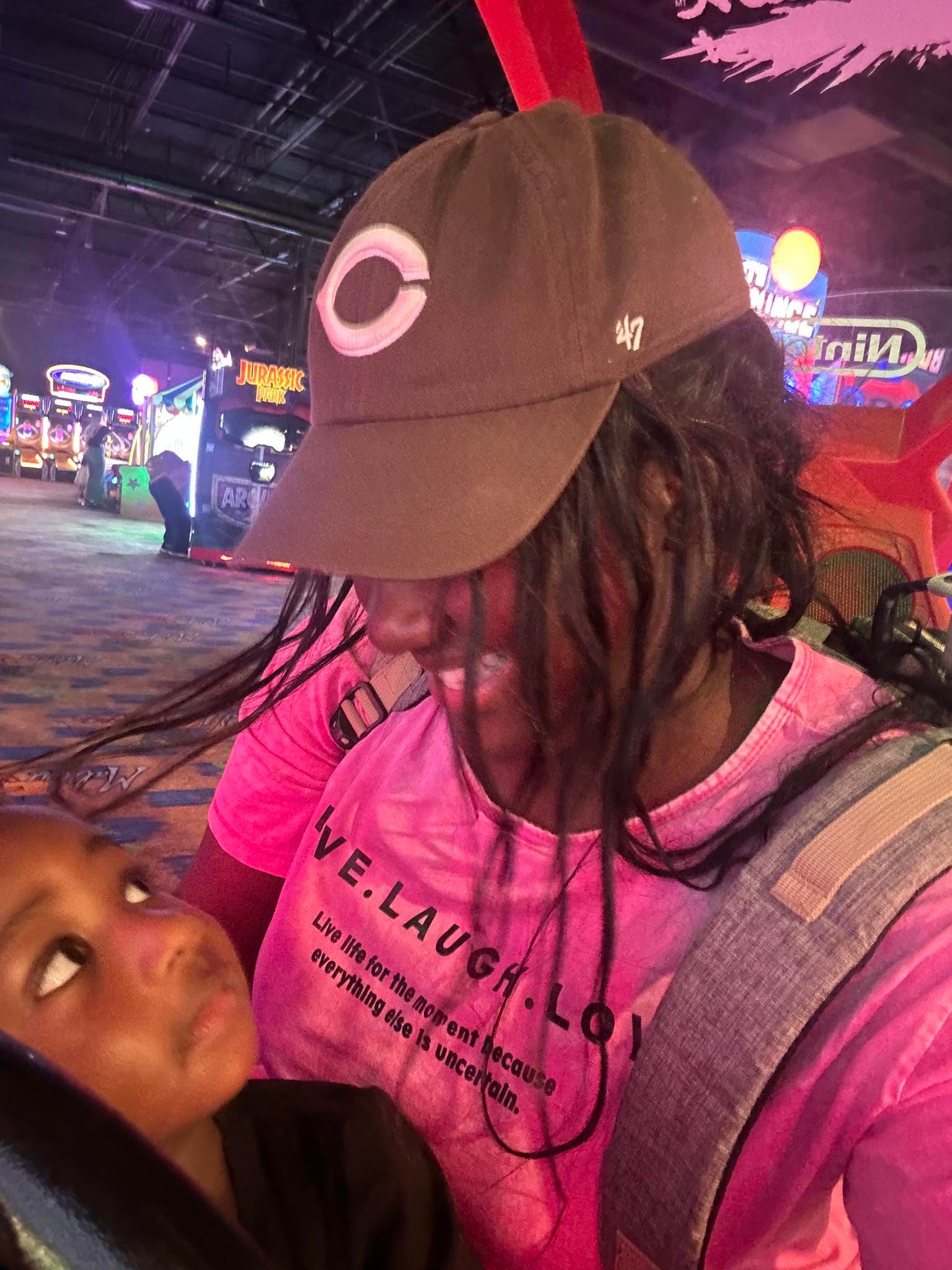
Her attorneys, Hishem Alsalman and Arianit Osmani, are fighting for her.
Now the rest of us need to make noise.
Call congressional offices. Contact DHS. Contact Kentucky’s elected officials. Send Armelle’s story to reporters. Share her name. Ask where she is. Ask whether she is being transferred. Demand that she be returned to her husband and child.
Be relentless.
Because systems like this depend on exhaustion. They depend on yesterday’s outrage becoming today’s forgotten headline. A woman becomes a detainee. A mother becomes a case number. A transfer happens. A bus leaves. A plane takes off.
And by the time everyone asks where she went, she is already gone.
Don’t let Armelle disappear into that machinery.
Her name is Armelle Bradshaw.
She came to this country when she was nine years old. She grew up here. She built a life here. She built a family here. She spent years standing up for people in her community.
Then the government told her to come to an immigration appointment.
Armelle showed up.
ICE was waiting.
Now we show up for Armelle.
So fucked up!
How could she have avoided this?
Why is ICE allowed to arrest people in a Federal Building?