
Rook T. Winchester v. Donald J. Trump


UNITED STATES DISTRICT COURT
FOR THE DISTRICT OF COLUMBIA
Rook T. Winchester,
Plaintiff,
v.
Donald J. Trump, in his official capacity as President of the United States,
Defendant.
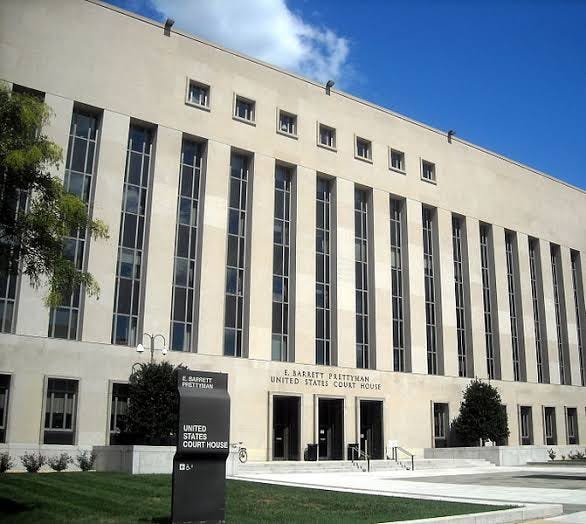
COMPLAINT FOR DECLARATORY JUDGMENT
Plaintiff Rook T. Winchester files this action seeking a declaratory judgment that the sitting President of the United States is constitutionally disqualified from holding office under Section 3 of the Fourteenth Amendment following his issuance of sweeping clemency to individuals who engaged in the January 6, 2021 attack on the United States Capitol.
This case raises a fundamental question of constitutional governance: whether the Constitution’s disqualification clause is enforceable when the person allegedly disqualified continues to exercise Article II power.
JURISDICTION AND VENUE
This Court has jurisdiction under 28 U.S.C. § 1331, because this action arises under the Constitution of the United States.
Declaratory relief is authorized by 28 U.S.C. §§ 2201–2202.
Venue lies in this District under 28 U.S.C. § 1391(e), because the Defendant resides and performs official duties within the District of Columbia.
This suit falls within the Larson–Dugan exception, which permits actions against federal officers performing unconstitutional acts. Plaintiff challenges an ongoing constitutional violation, not lawful governmental action.
PARTIES
Plaintiff, Rook T. Winchester, is a United States citizen subject to the laws, orders, and executive actions issued by the President. Plaintiff alleges direct constitutional, structural, and democratic injuries resulting from the continued exercise of executive power by an individual barred by Section 3 from holding office.
Defendant, Donald J. Trump, is the President of the United States, sued in his official capacity only.
STATEMENT OF FACTS
1. January 6, 2021 was an insurrection. Federal courts, the Department of Justice, and Congress have repeatedly described the events at the United States Capitol as an insurrection aimed at stopping the lawful transfer of presidential power.
2. Hundreds of individuals have been convicted for offenses arising from their participation in that attack. Courts have affirmed that the conduct constituted an assault on the constitutional order.
3. The President, while in office, issued mass clemency to individuals who engaged in the January 6 attack and directed federal prosecutors to dismiss pending charges.
4. Clemency is an act of state power that nullifies punishment, confers legal protection, signals governmental validation, and materially aids the beneficiaries.
5. The Fourteenth Amendment, Section 3 provides:
“No person shall… hold any office, civil or military, under the United States… who, having previously taken an oath… to support the Constitution of the United States, shall have engaged in insurrection or rebellion against the same, OR given aid or comfort to the enemies thereof. But Congress may by a vote of two-thirds of each House remove such disability.”
6. Issuing mass pardons and commutations to individuals who engaged in an insurrection constitutes “aid or comfort” within the meaning of Section 3.
7. Section 3 does not require impeachment, criminal conviction, or the success of the insurrection. It is self-executing, as confirmed by Reconstruction-era enforcement, including the exclusion of sitting officials from office without impeachment proceedings.
8. Congress has not removed this disability by the required two-thirds vote.
PLAINTIFF’S INJURY AND STANDING
Plaintiff alleges specific, concrete injuries:
A. Constitutional Structural Injury.
Being governed by an individual constitutionally barred from holding office distorts the structure of government and unlawfully alters Plaintiff’s relationship to federal power.
B. Democratic Injury.
A disqualified President undermines the lawful functioning of the political system, diminishing the value of Plaintiff’s vote and representation.
C. Legal Instability Injury.
Executive orders, enforcement actions, and federal directives issued by a constitutionally barred President create legal uncertainty affecting Plaintiff’s rights and obligations.
D. Separation-of-Powers Injury.
Congress’s constitutional role is impaired when the executive branch is led by a person ineligible to hold the office, thereby harming Plaintiff’s representation in that branch.
E. Non-Generalized Grievance.
Plaintiff directly experiences the effects of unlawful executive power. This is not an ideological injury shared equally by all citizens.
F. Case or Controversy.
A sitting President’s constitutional eligibility is a live, immediate, and justiciable controversy appropriate for judicial review.
HISTORICAL CONTEXT OF SECTION 3
During Reconstruction, Section 3 was repeatedly applied to sitting officials without impeachment or criminal conviction. Federal and state bodies recognized it as self-executing, and courts adjudicated qualification disputes. The clause functioned precisely as written: automatic disqualification unless Congress lifted the disability.
This historical practice confirms that determining whether an officeholder is constitutionally barred is a judicially reviewable question.
CLARIFICATION REGARDING IMPEACHMENT
This action does not invoke impeachment. Impeachment removes a President; Section 3 disqualifies a person from holding office. These are distinct mechanisms. Section 3 operates independently, and its disability remains unless Congress affirmatively lifts it.
Plaintiff seeks only a declaration of what the Constitution requires.
NOT A CHALLENGE TO ANY ELECTION
This action does not challenge the validity of any election, seek to overturn results, or request removal from office. It asks solely for a determination of constitutional eligibility.
A declaratory judgment allows the political branches to act with clarity, consistent with the Constitution.
SECTION 3 “AID OR COMFORT” CLAIM
Clemency is undeniably “aid” because it:
nullifies legal consequences,
restores rights,
frees individuals from custody,
halts prosecutions, and
signals official protection from the state.
When extended to individuals who engaged in an insurrection, clemency constitutes textbook “aid or comfort.”
The President, bound by an oath to support the Constitution, provided this aid while holding office.
Under Section 3, this creates a constitutional disability.
DECLARATORY JUDGMENT IS APPROPRIATE
Declaratory relief is the mildest judicial remedy and is appropriate where:
constitutional uncertainty impairs government function,
public rights are implicated, and
resolution will assist the political branches.
A declaration here does not compel removal; it clarifies the law.
POLITICAL QUESTION DOCTRINE DOES NOT APPLY
Determining the constitutional qualifications of federal officeholders is a classic judicial function. Courts routinely adjudicate qualification disputes (Powell v. McCormack). This is not a textually committed issue of another branch. It is a pure question of constitutional meaning.
SEVERABILITY
If any part of this Complaint is deemed insufficient, remaining claims should proceed independently.
REQUEST FOR RELIEF
Plaintiff respectfully asks the Court to:
Declare that Section 3 of the Fourteenth Amendment applies to the presidency.
Declare that issuing clemency to participants in an insurrection constitutes giving “aid or comfort.”
Declare that the current President is constitutionally disqualified unless Congress removes the disability by a two-thirds vote.
Grant any further relief the Court deems just and proper.
THE FINAL WORD
This case asks whether the Constitution’s disqualification clause remains enforceable when the individual alleged to be disqualified occupies the nation’s highest office and continues to wield its power. If no citizen may seek judicial clarification, then Section 3 becomes, in practice, unenforceable—a constitutional command without a remedy. The judiciary does not presume that the Constitution contains empty or inoperative provisions.
A declaratory judgment here does not remove a President, direct congressional action, or disturb any election. It merely states what the Constitution requires, allowing the political branches to act within a clarified constitutional framework. When a constitutional injury affects every citizen, the courts cannot stand aside. They must say what the law is.
If you’ve ever wondered what it looks like when independent journalism grows teeth, here’s your answer: we’re about to put $405 on the line to file a Section 3 challenge in federal court, because no one else in this country seems willing to say out loud what the Constitution already wrote in plain English. This isn’t a stunt. This is what accountability looks like when institutions curl up like frightened hedgehogs. Closer to the Edge has never played it safe, and we’re not starting now. If you believe in holding power to the actual text of the law, if you believe that journalism should do more than scream into the void, if you want to see what happens when an independent outlet refuses to bow — then subscribe, support, and stand behind this. We’re taking the Constitution at its word. We’re taking this fight into the courtroom. And we’re doing it because the truth still matters, even if we have to pay a filing fee to remind Washington of that fact.
I wish I was able to contribute but I can no longer afford to stay in my home. I am proud of you. Thank you!
Good for you Rook. I've shared your post. There must be a number of ways we can get him and his sycophantic toadies out of office. We should all be studying the Constitution. Let us know how to help out.