
THE DAUGHTER HE LEFT BEHIND BECAME AN ACTIVIST


“Con los pobres de la tierra quiero yo mi suerte echar.”
“With the poor of the earth, I want to cast my lot.”
— José Martí
I grew up hearing José Martí’s words.
Like many Cuban Americans, I was taught to admire his courage, his patriotism, and his belief in human dignity. We quoted him when speaking about freedom. We invoked him when discussing exile. We celebrated him as part of our identity.
But it wasn’t until my father was detained that I truly understood what Martí was asking of us.
He was asking us to choose.
Not between political parties.
Not between Cuba and the United States.
Not between left and right.
But between power and people.
I chose people.
I never planned to become an activist.
I was a tour guide in Miami. I spent my days sharing stories about a city built by immigrants, exiles, dreamers, and survivors. I was building businesses. Creating experiences. Growing something that was entirely my own.
I loved that life.
I worked hard for it.
I believed my future would be measured by the tours I built, the businesses I expanded, and the community I served.
Then my father was detained.
And suddenly none of that mattered.
The business I had built stopped being my focus.
My plans disappeared.
My future was put on hold.
The only thing that mattered was bringing my father home alive.
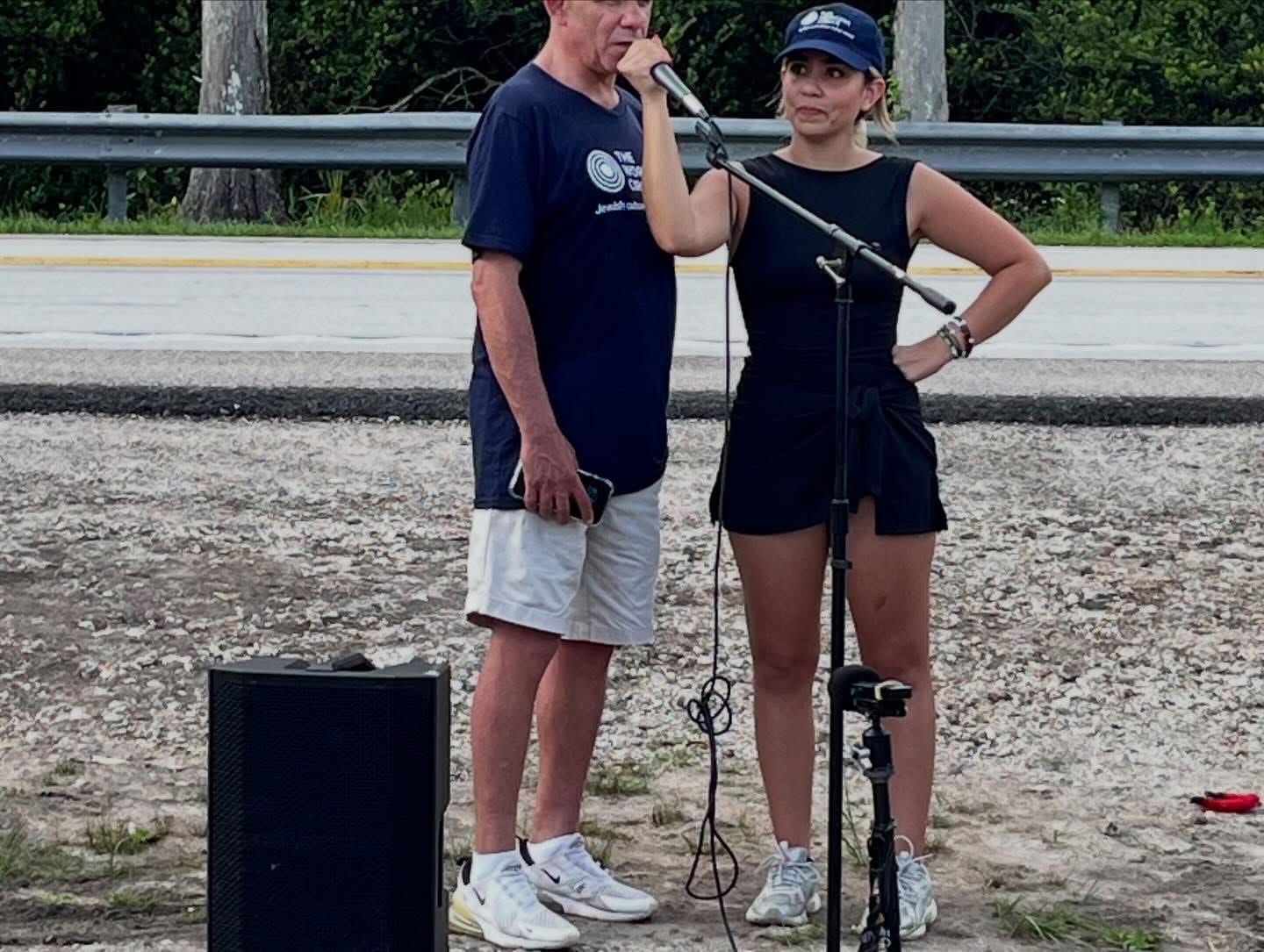
My father was not a political talking point.
He was not a statistic.
He was not a case number.
He was my father.
A man living with diabetes, schizophrenia, neuropathy, heart disease, and high blood pressure.
A man whose health was already fragile before detention.
For more than six months, I lived with fear.
The kind of fear that follows you everywhere.
The kind that wakes you up in the middle of the night.
The kind that settles into your chest and never fully leaves.
Every phone call carried uncertainty.
Every day brought new anxiety.
Every night ended with unanswered questions.
Was he getting proper medical care?
Was he receiving his medication?
Would I see him again?
I learned that detention does not only imprison the people inside.
It imprisons entire families.
It consumes your peace.
Your finances.
Your relationships.
Your ability to imagine a future beyond survival.
While politicians debated immigration, my family was living its consequences.
This was not politics to us.
It was our life.
And then, after more than six months, my father was finally released.
We thought the nightmare was over.
We thought freedom would bring relief.
Instead, we found ourselves facing a new crisis.
Just days after coming home, my father was hospitalized with dangerously elevated blood sugar levels and symptoms that raised concerns about a possible stroke.
The freedom we had prayed for arrived alongside another fight.
After spending months trying to bring him home, we suddenly found ourselves fighting to help him recover.
We got him back.
But we did not get him back unchanged.
That realization broke my heart.
Because detention does not end when someone walks out the door.
The trauma follows the family home.
The medical consequences follow families home.
The fear follows the family home.
The financial burdens follow families home.
And recovery becomes its own battle.
For a long time I was angry.
Angry at what had happened to my father.
Angry at how powerless I felt.
Angry that so many other families were carrying the same pain.
But eventually that anger became something else.
Purpose.
At first, I was simply fighting for my father.
Then I began meeting other families.
Families terrified for loved ones inside detention.
Families desperately searching for answers.
Families carrying the same fear that had consumed my life.
I realized that if I felt alone, thousands of others did too.
So I began speaking out.
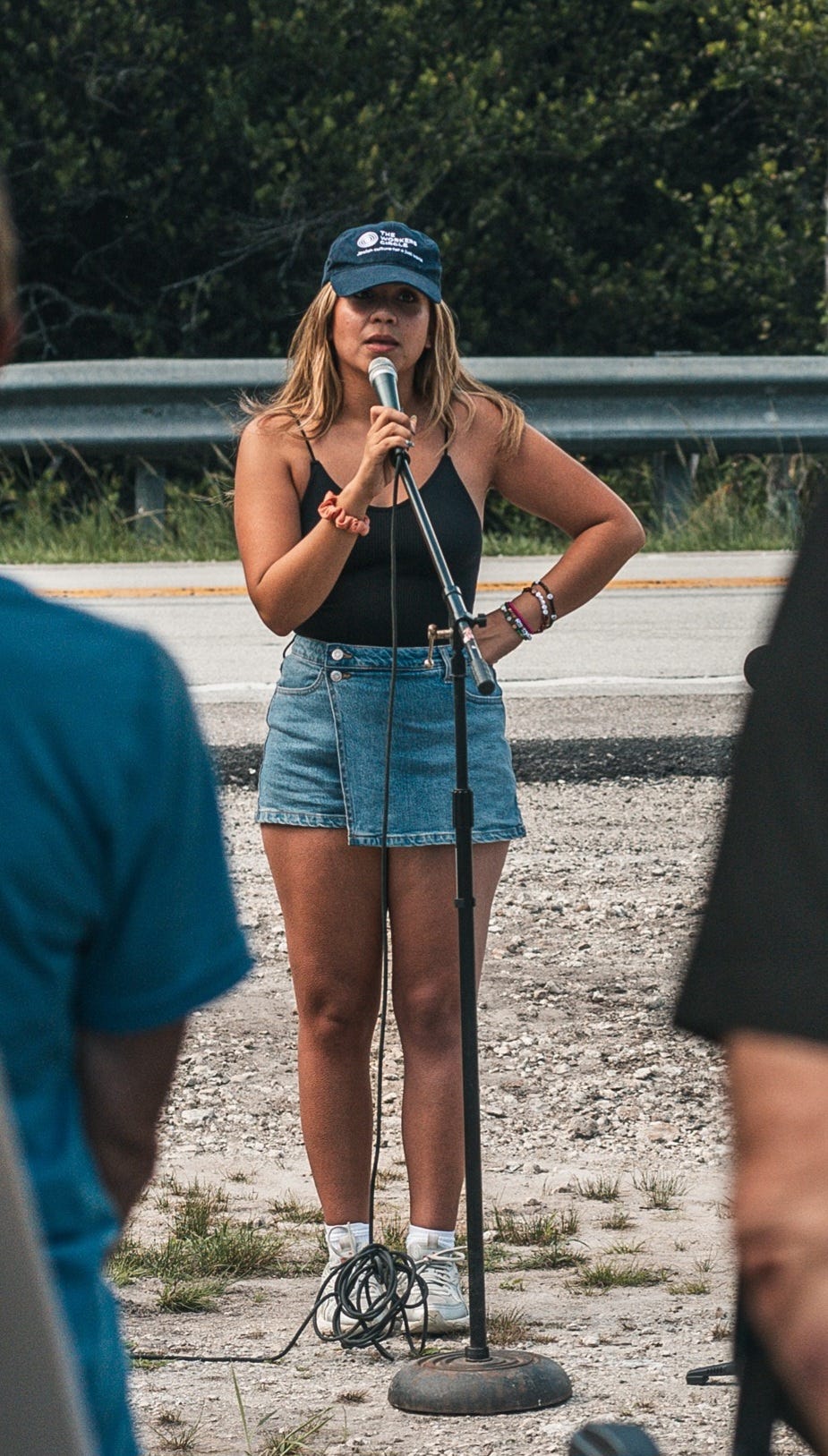
I shared my father’s story publicly.
I worked with families navigating detention.
I spoke with journalists.
I attended and organized vigils.
I stood alongside faith leaders, labor organizers, immigrant advocates, and community members demanding accountability and dignity.
I helped create spaces where families could gather, grieve, organize, and fight together.
What started as a daughter’s fight became something larger than myself.
One of the most defining moments came when I attended the hearing involving Homeland Security Secretary Kristi Noem.
I was not there as a politician.
I was not there as a policy expert.
I was there as a daughter.
A daughter carrying the story of a father who had suffered.
A daughter representing families who too often feel invisible.
A daughter refusing to allow people in power to discuss immigration without confronting its human consequences.
I never imagined standing in front of cameras.
Giving interviews.
Speaking at rallies.
Helping organize demonstrations.
Becoming one of the public faces of the fight for immigrant rights.
But when someone you love is suffering, silence stops being an option.
As a Cuban American, this experience also forced me to confront difficult questions.
I grew up hearing stories about exile, separation, sacrifice, political persecution, and survival.
Those stories shaped my understanding of freedom and justice.
Which is why one of the most painful parts of this journey has been watching so many within my own community support policies that inflict those same wounds on other families.
That truth is difficult for me to say.
It is even more difficult to live.
I feel profound disappointment when I see fellow Cuban Americans celebrate detention policies that separate families or dismiss the suffering of immigrants as the price of security.
I understand the trauma that shaped our community.
I understand the history.
But I struggle to understand how a community whose identity is rooted in exile can become indifferent to the suffering of people seeking the same chance at dignity that our own families once sought.
The lesson I inherited from my community was not that some immigrants deserve compassion and others do not.
The lesson I inherited was that human dignity is universal.
Perhaps the moment that crystallized this for me came when I watched political leaders and public figures turn immigration into a headline, a campaign message, or a social media post while families like mine were living through a crisis.
I remember reading statements and posts about immigration and feeling something unexpected.
Not outrage.
Indifference.
Because while politicians were crafting messages, I was sitting beside hospital beds.
While commentators debated strategy, I was wondering whether my father would recover.
While others treated immigration as politics, my family was living its consequences.
At some point the tweets stopped mattering.
The headlines stopped mattering.
The political theater stopped mattering.
What mattered was a father trying to heal.
What mattered was a daughter trying to help him recover.
What mattered were the countless families experiencing similar pain far away from cameras and microphones.
That experience changed me.
It taught me that real life happens far from social media.
Far from campaign slogans.
Far from the people who profit politically from division.
It taught me that humanity must come before ideology.
I believe families belong together.
I believe people deserve medical care regardless of immigration status.
I believe compassion is not weakness.
And I believe war, whether military, economic, or political, is not a path to peace.
José Martí also wrote:
“La mejor manera de decir es hacer.”
“The best way to say is to do.”
Those words became my compass.
Because there came a point when speaking was no longer enough.
Watching was no longer enough.
Hoping was no longer enough.
Action became necessary.
People often ask how I became an activist.
The truth is simple.
I became an activist because I am a daughter.
A daughter who loved her father enough to risk everything she had built.
A daughter who discovered that grief can become purpose.
A daughter who learned that ordinary people can challenge powerful systems when they stand together.
I did not choose this fight.
This fight chose me.
And while it cost me the life I once imagined for myself, it gave me something I never expected:
A voice.
A community.
A mission.
I used to spend my days telling stories about Miami’s history.
Now I am helping write a new chapter in it.
One where immigrant families refuse to remain invisible.
One where daughters refuse to remain silent.
One where dignity matters more than politics.
And one where, as Martí urged us more than a century ago, we choose to cast our lot with the people of the earth, not the powerful who seek to divide them.
 |
|
Your essay toches me deeply. I will never understand the lack of empathy for other peoples suffering. Why do people hate what they do not know? This country was built on the backs of immigrants when it began and even today.
Every person who calls themselves American are or descendents of immigrants.
Keep up the fight.
You're an inspiration, Arianne Betancourt!! This article resonates with me. I'm the daughter of Mexican immigrants who were afforded an opportunity in America at a time when things were not so brazenly cruel. As I see the detentions happening today, and how it is tearing families apart, and causing fear, anxiety, health, financial and so many more irreparable issues, I can't stop to think of how incredibly fortunate my family was to live through a different chapter in America. BUT it also gives me more fuel to help fight for the new wave of immigrants and speak up against the atrocities inflicted upon the most vulnerable. It helps me align with the most amazing, like-minded organizations and people out there fighting for their rights! I'm also disgusted at the Mexican-Americans who have conveniently forgotten their own family's immigrant journey.