
THE LONG ROAD AHEAD
Three Days with Justo Betancourt


It was 2am last Thursday in southwest Miami-Dade when Justo Betancourt walked out of a van and into the first night of the rest of his life.
Except he couldn’t. Not yet. Not there.
ICE had rules about that.
No hugs at the door. Car searched. No photos. No video. Six months in the swamp, a stroke, a glucose level of 500, a deportation bus that Mexico turned around because even they could see what the United States government had done to this man — and the agents handing him back to his family needed them to drive to a gas station first.
That’s where the first embrace happened. At a gas station at 2am.
That’s what freedom looks like in America in 2026.
“Seeing him step out of the van, so frail and struggling with each step,” Arianne said afterward. “It’s bittersweet because I’m relieved he’s home, yet I’m angry about his condition.”
I flew into Miami Thursday morning. Arianne picked me up and we went to a Cuban breakfast place — just the two of us — while her father was at a mandatory ICE check-in because the government that nearly killed this man in the Everglades wasn’t finished reminding him who holds the leash.
Arianne and I sat across from each other over café con leche and eggs and Cuban toast — tostadas, buttered and pressed, dipped directly into the coffee the way you do in Miami, the way Cubans have always done, a ritual that predates every border and every detention facility and every administration that has ever tried to decide who belongs here and who doesn’t.
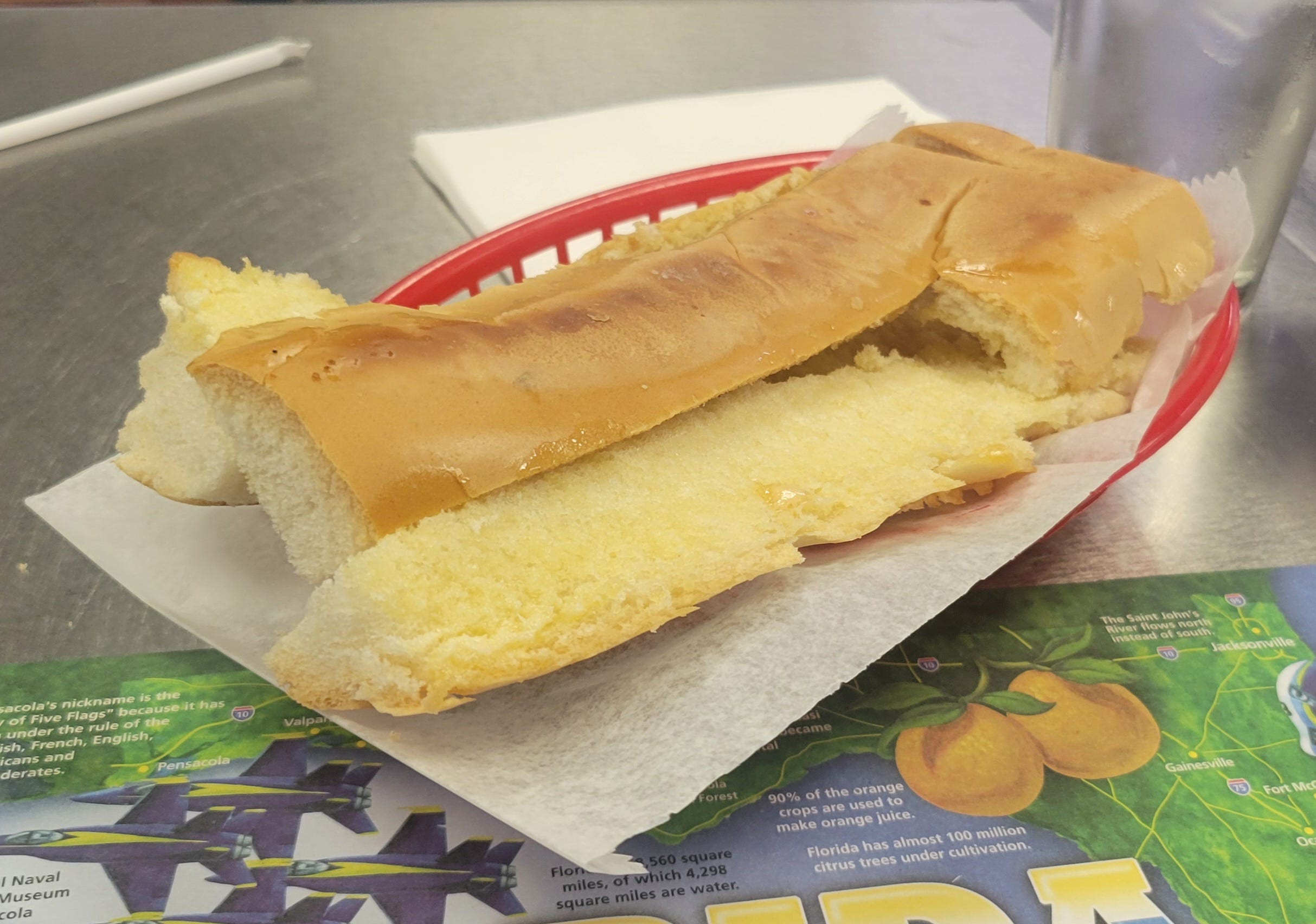
The coffee was strong and sweet. The morning was already hot.
Justo Betancourt had been shackled up to 23 hours a day. He had watched other men get pepper-sprayed. He had signed a document in English he could not read, told it was a routine annual registry.
It wasn't.
Justo had been in detention since October 29th, 2025. Walked into his annual check-in and did not walk out again for over six months.
Justo is a type 2 diabetic. Insulin twice a day to survive. When they took him in and learned this, the response from the people now responsible for his life was seven words:
You can get your insulin in Mexico.
We all spent Thursday afternoon together.
Justo walked slow. His right side trembled. He held his fifteen-month-old granddaughter and loved seeing her — you could see it move through him, that specific joy that doesn’t require language, that six months in detention cannot fully extinguish in a man who has people to come home to.
FRIDAY
Friday morning I stepped outside of Arianne’s house for a cigarette.
I was standing there alone when Arianne came and found me.
She told me what her father had just told her.
He had experienced one or more mini-strokes while inside Alligator Alcatraz.
He hadn’t told her this before. Not in six months. Not once.
He kept it from her to protect her from the heartache.
I’m not going to describe what she looked like when she told me that. Some things don’t belong to journalism. Some things belong only to the people who lived them and the silence that comes after.
I will say this: I understood, standing there with a cigarette in the Florida morning, exactly what six months of fighting for someone looks like when it finally finishes hitting you all at once.
ICE had told Justo they were coming to verify Arianne’s address. Sometime between 7am and 7pm. Friday or possibly the following Monday. A twelve-hour window spread across two possible days — because the government that put an ankle monitor on a 55-year-old stroke survivor with trembling in his right side could not be bothered to be more specific than that.
So they waited. By the door. In the house. The way you do when the people who nearly killed your father still control your father’s movements.
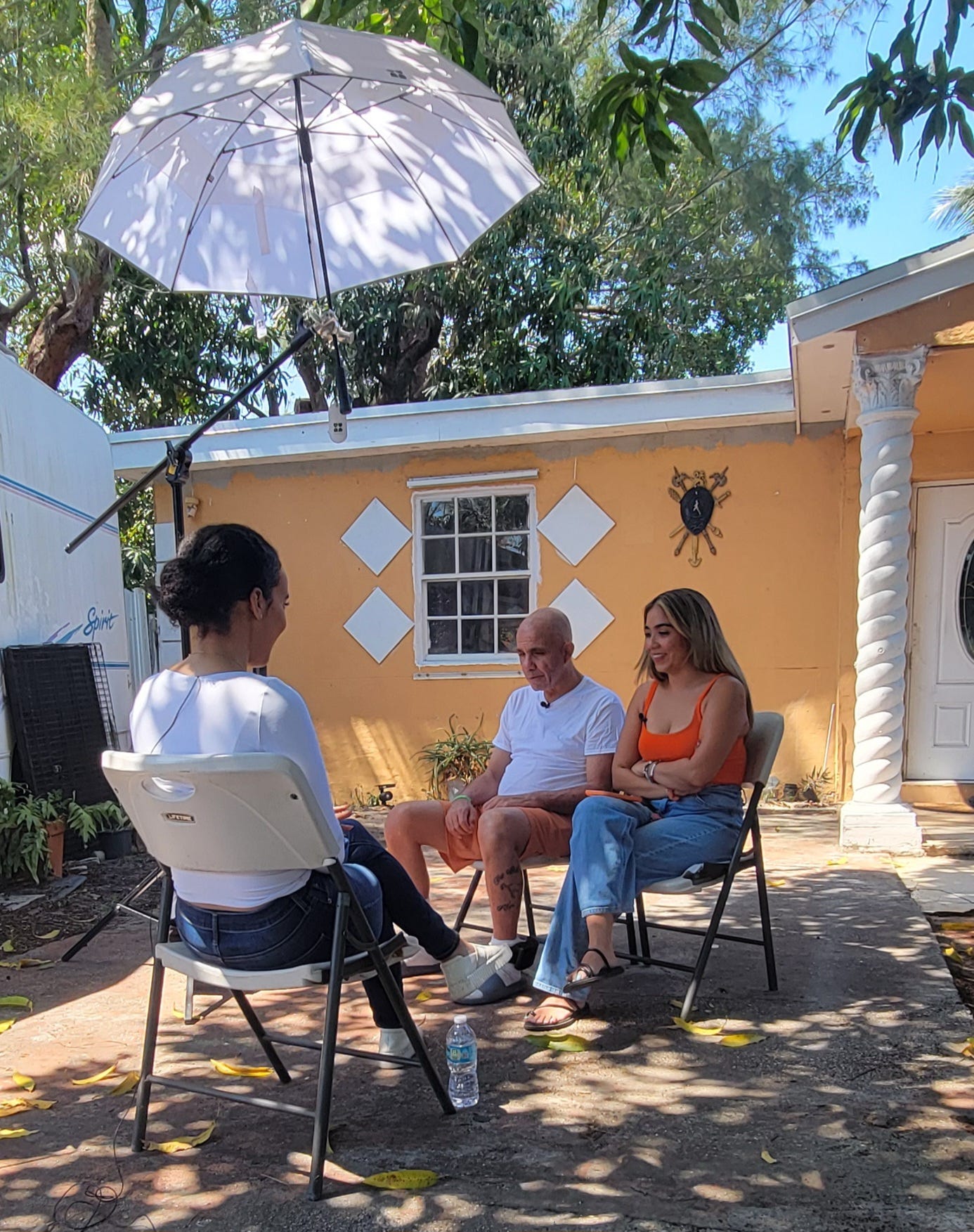
Carolina Peguero from CNN arrived shortly after 2pm and set up in the driveway of the yellow house — folding chairs in the Florida sun, a white umbrella for shade, the old Itasca camper against the fence behind them. Justo sat in the chair and told his story in Spanish and in English to a camera that would carry it further than the United States government would prefer.
Arianne sat next to him and tried to hold it together.
After everything she had learned that morning, standing outside with me in the Florida air, she sat in that driveway and held it together.
After 7pm, we were finally free to leave the house.
There’s an ice cream shop Arianne and her father used to go to when she was a kid. Pink soft serve. Neon lights. The specific, irreplaceable geography of a childhood that belongs only to them.
The three of us went.
I sat with them on that bench in the Florida night and I watched a father and daughter eat ice cream like they did when Arianne was in kindergarten.
I saw love.
I saw happiness.
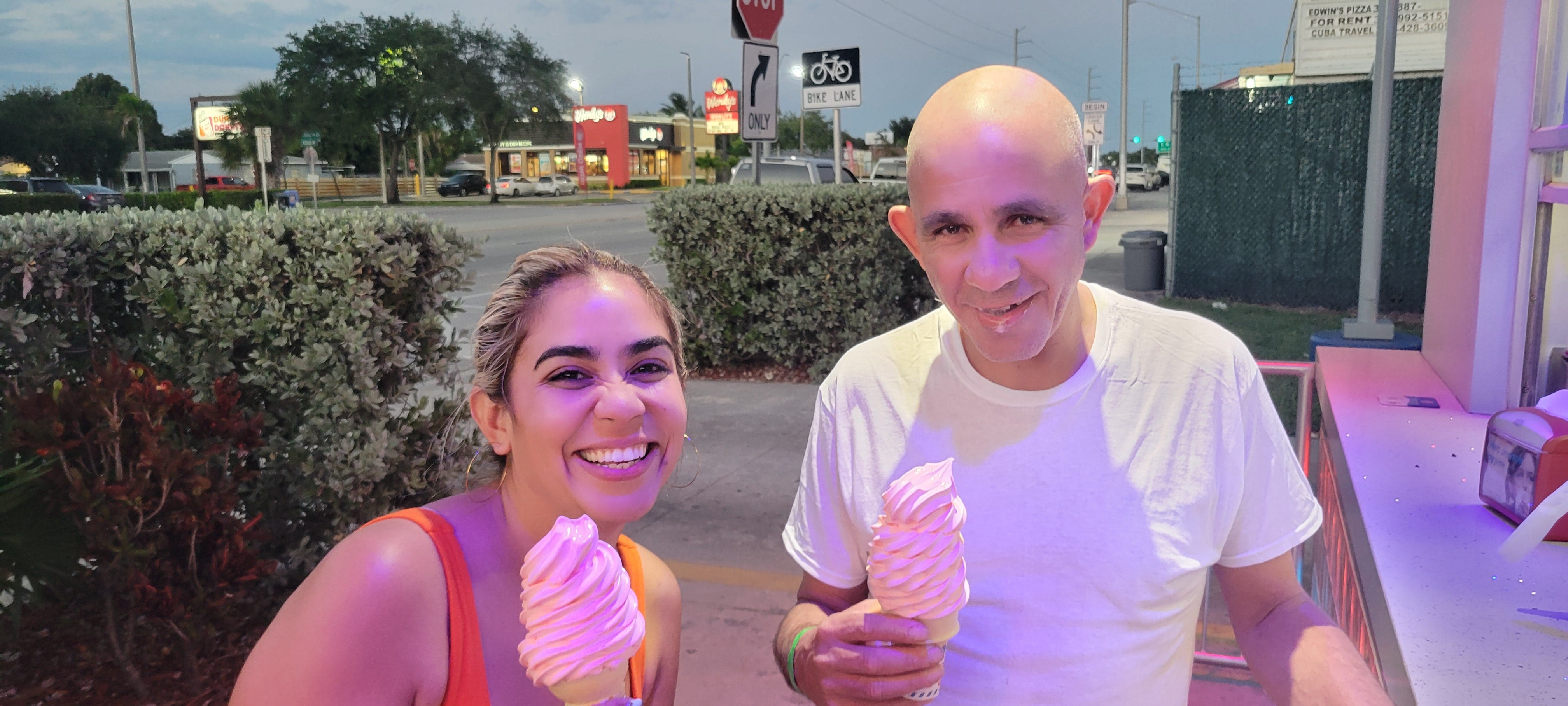
I am not a sentimental person and I am not given to easy emotion and I have covered enough of this fight to have built up a professional callus around the part of me that used to break more easily.
It broke anyway. I teared up.
SATURDAY
The lines at the clinic were too long.
Justo’s blood sugar was still high. They needed a doctor. The lines were the kind of long that happens when people don't have insurance and the safety net has been dismantled.
We went to get him a phone. Ordinary errands. Normal life. Except his blood sugar wasn't coming down and he was unsteady on his feet and I was watching all of it with the particular helplessness of someone who is a witness and not a doctor and not family and cannot do a single goddamn thing except be present and write it down.
I took a Lyft to the airport at 5pm.
Justo was too unsteady for me to feel good about asking Arianne to drive me there.
Before my ride arrived, we sat together in the yard — me, Justo, Arianne. He reached into his pocket and gave me a bracelet. Orange and black, woven tight from plastic bags — the ones the men inside Alligator Alcatraz repurposed with their own tired hands, because human beings will make something out of nothing if you give them nothing long enough. They make them for each other. They make them because making something is the one thing a cage cannot take from you.
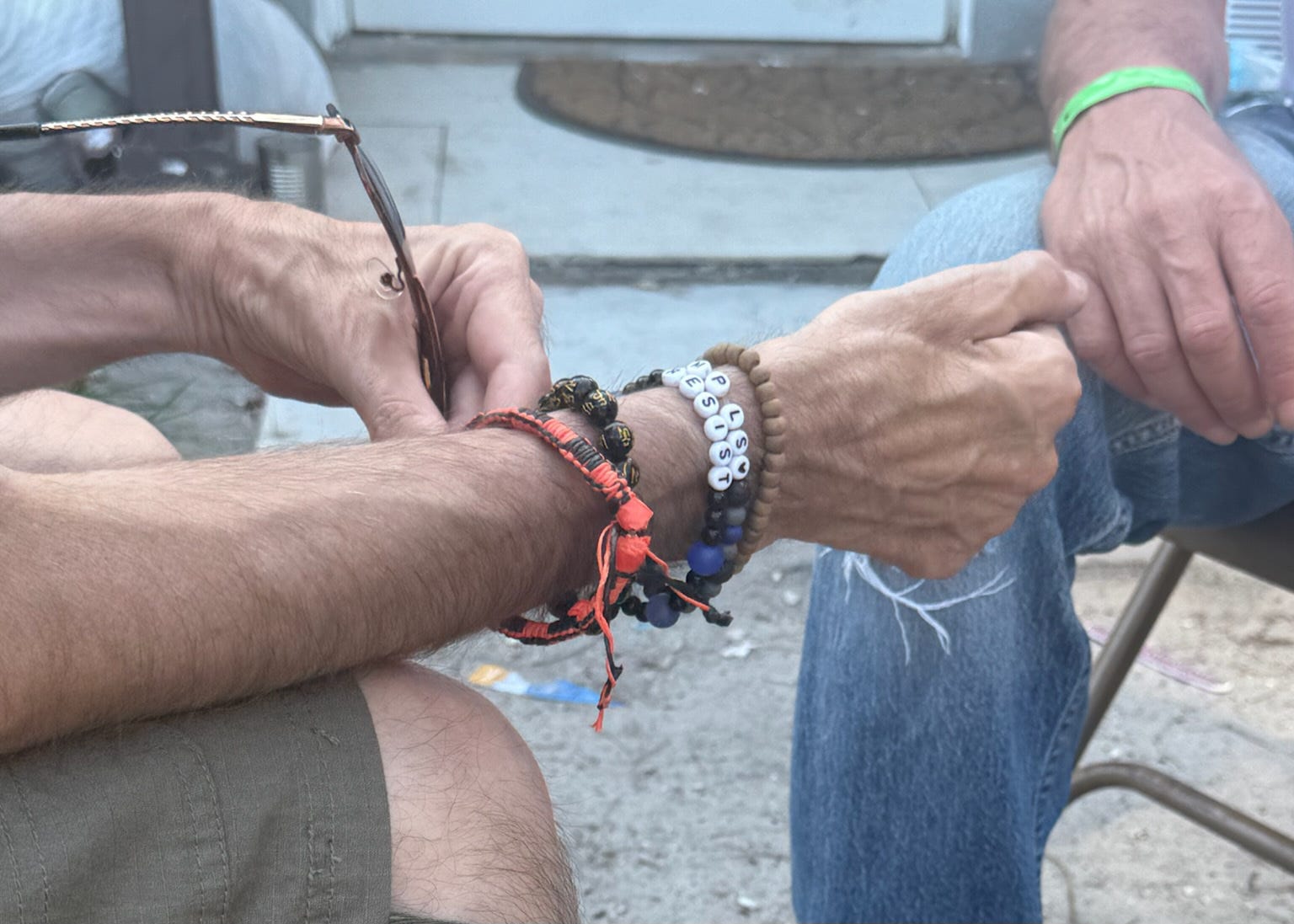
Arianne tied it onto my right wrist.
Justo said thank you.
We hugged.
I took off one of my own bracelets — the one that says RESIST — and gave it to him.
He slid it on.
I got in the Lyft and made my way to the terminal. Florida got smaller out the window of the plane. My sense of sadness did not. I was concerned. I felt helpless. I did not feel good about any of it.
SUNDAY
Justo Betancourt was in the emergency room. Slumped over for most of the day. Doctors running tests.
Here is what they are looking for, in plain language, because this moment requires plain language and not a single euphemism:
When a diabetic man's insulin is withheld for six months — when his glucose hits 500, three times the threshold for acute crisis, the level at which organs begin to fail and the body begins consuming itself — the damage doesn't stop when the detention ends. It continues unfolding in the body long after the door opens and the gas station embrace happens and the ice cream melts on the bench outside the shop she used to go to with him when she was in kindergarten.
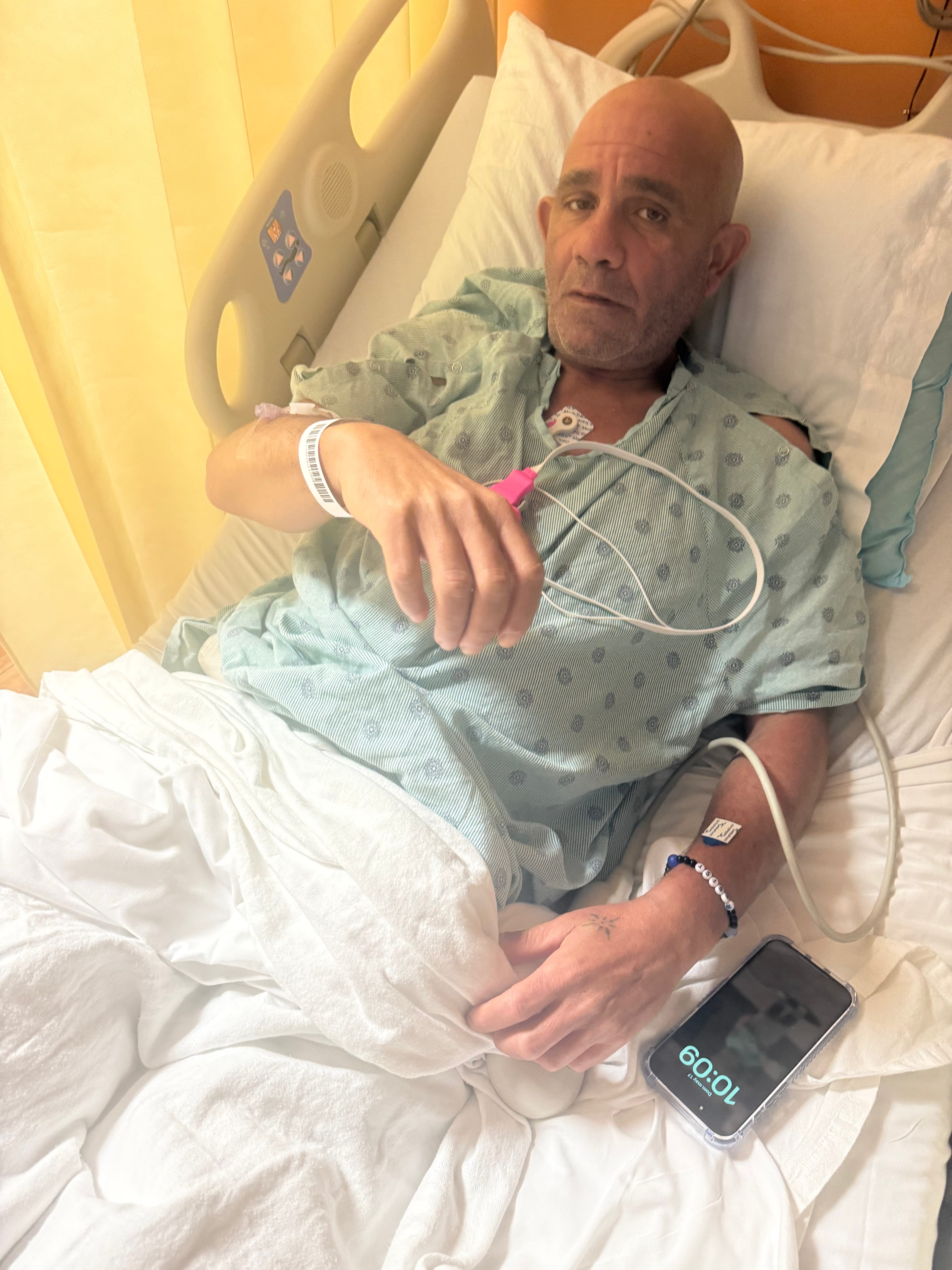
Justo’s blood vessels are damaged. Narrowed. Scarred. The stroke he survived alone in that swamp — the one he kept secret to protect his daughter — left arterial damage that doesn't heal on its own. Now those compromised vessels are throwing small clots. Mini-strokes. Transient ischemic attacks. Each one a brief interruption of blood flow to the brain. Each one its own small destruction. Each one a foreseeable, documented, medically predictable consequence of months of neglect and indifference.
Sunday was supposed to be different. Sunday was the weekly vigil outside Alligator Alcatraz — more than forty Sundays of people gathering across the highway to pray and sing and refuse to let the people inside be forgotten. Arianne was supposed to be there in person. With her father home. A moment to exhale. A moment to feel, just for one Sunday, like the fight had been worth it.
Instead she called in on speakerphone and told the people praying for her father that he was recovering in a hospital bed.
What should have been a moment of relief became the announcement that it isn't over. That the damage done to Justo Betancourt inside a facility operated by the state of Florida and funded by the United States government does not stop when the van door opens at 2am. Does not stop at the gas station. Does not stop at the ice cream shop or the CNN driveway interview or the clinic with lines too long to wait in.
It does not stop.
People need to be held accountable, Arianne said, when her father was still inside. And that investigation needs to be thorough and as immaculate as it can be.
She was right then.
She is right now.
She is in that hospital room right now, sitting beside a man in a hospital gown with an IV in his arm and a pulse ox on his finger and wires running across the white sheets.
None of this is an accident. This was designed. The medication withheld. The complaint boxes removed. The oversight offices eliminated and called internal adversaries. The inspection reports reduced by 36% as the detained population tripled. The medical payment system shut down while ICE's own internal documents called it an absolute emergency that could cause loss of life.
They knew.
They did it anyway.
This is American sadism. Funded at a billion dollars. Celebrated at press conferences. Defended by a governor who said if we shut the lights out tomorrow, we will be able to say it served its purpose.
It served its purpose.
Justo Betancourt is in the emergency room.
His daughter is with him.
“I'm not giving up,” she said, several Sundays ago, across the highway from the swamp.
She hasn't.
Neither has Justo’s body.
Neither have we.
A GoFundMe has been set up to help Justo Betancourt on his road to recovery. If you have a little something to give, please give it.
Thank you for showing the horrible individual, personal impact of this cruel, criminal regime. Prayers for Justo and his daughter, and for our country to bring this terror to a screeching halt.
Thank you for bearing witness to the dreadful crimes committed by this regime.