
THEY LOOKED THE OTHER WAY
How Four Banks and Multiple Government Officials Helped Bury a $2 Billion Money Trail


A year ago, this publication wrote a letter to Senator Ron Wyden. We thanked him for dragging the Treasury Department’s Epstein file into the light. We called what he’d found — over a billion dollars in wire transfers, sanctioned Russian banks, payments correlated with the movement of trafficked women and girls — a multinational organized crime ring with geopolitical implications. We said the time for subtlety was over. We demanded the full Treasury file. We demanded a real investigation. We demanded to know who was burying it and why.
Today, Wyden answered.
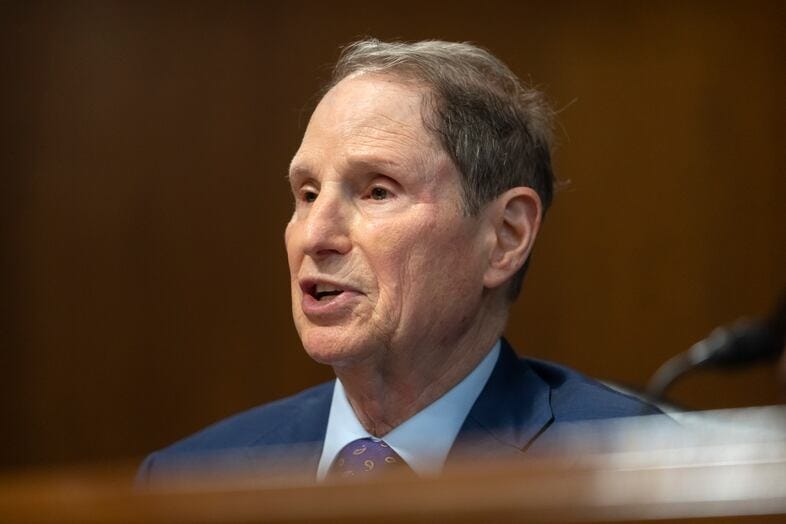
His office released a 67-page report called Looking the Other Way. Bloomberg got the advance copy. The title is accurate. It is also, somehow, an understatement.
Here is what we now know.
THE BANKS
JPMorgan Chase processed over $1.3 billion in suspicious Epstein transactions. That is not a typo. Between 2002 and 2016 — while Epstein was alive, while he was a registered sex offender, while he was actively trafficking women and girls across international borders — JPMorgan flagged exactly $4.3 million. After he was arrested in 2019, the bank suddenly discovered 5,000 additional wire transfers worth $1.3 billion that it had somehow neglected to mention.
That is roughly a 300-to-1 ratio between what JPMorgan reported in its enormous 2019 filings and what it had reported during the previous seventeen years.
And Epstein was useful. Internal bank emails obtained through the investigation show that JPMorgan may have delayed filing suspicious activity reports because Epstein was a valuable source of client referrals. A convicted sex offender was apparently too good for business to report. JPMorgan’s own general counsel, Stephen Cutler, wrote in a 2011 internal email that Epstein was “not an honorable person in any way” and “should not be a client.” Cutler later testified that executives Jes Staley and Mary Erdoes made the decision to keep him anyway. Internal compliance escalations were marked “pending Dimon review” and “for Jamie.”
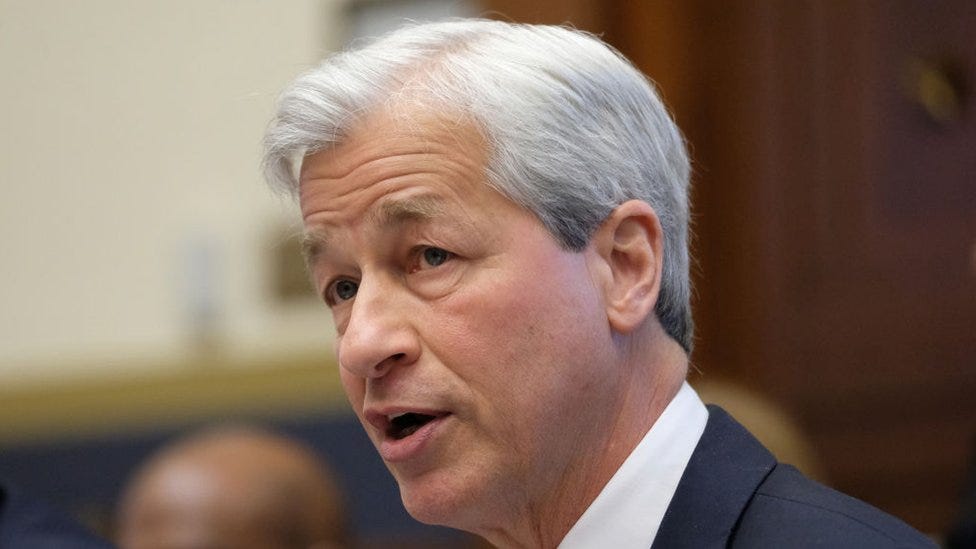
CEO Jamie Dimon testified under oath that he did not recall knowing anything about Epstein until 2019. Jes Staley testified under oath that he told Dimon about Epstein’s 2008 guilty plea to soliciting sex from a minor. Those two statements cannot both describe the same history.
JPMorgan paid $290 million to settle a victim class action and $75 million to the U.S. Virgin Islands. Shareholder money. No admission of liability. No individual banker has been criminally charged.
Deutsche Bank filed a single suspicious activity report after Epstein’s arrest covering 1,140 wire transfers worth $147 million that moved through his accounts between 2013 and 2019. The red flags included money routed through modeling agencies — one of the oldest fronts in the trafficking playbook — and payments reaching women across Russia and Eastern Europe.
The bank’s total suspicious filings on Epstein exceeded $250 million, all reported only after his arrest. Deutsche Bank declined to comment. The bank previously paid a $150 million fine to New York’s financial regulator for processing payments to “Russian models,” university tuition for female associates, and cash wired to women with Eastern European names — transactions the regulator said were consistent with public descriptions of Epstein’s prior wrongdoing.
Deutsche Bank settled its victim lawsuit for $75 million. Shareholder money. No admission of liability.
Bank of America reported $170 million in Epstein-related transactions connected to billionaire Leon Black, the former CEO of Apollo Global Management. In its own suspicious activity filings, the bank described some of those transactions as having “no apparent economic, business, or lawful purpose.”
Then it sat on that admission for five to seven years before telling anyone.
Bank of America processed Black’s payments to Epstein through 18 enormous wire transfers, generally between $8 million and $10 million, including one transfer worth $20 million. Wyden’s investigators found no indication the bank demanded records proving that Epstein had actually performed the tax and estate-planning work used to justify the payments.
Wyden’s investigation found that the true total Black paid Epstein was $170 million, $12 million higher than Apollo’s own board investigation had identified.
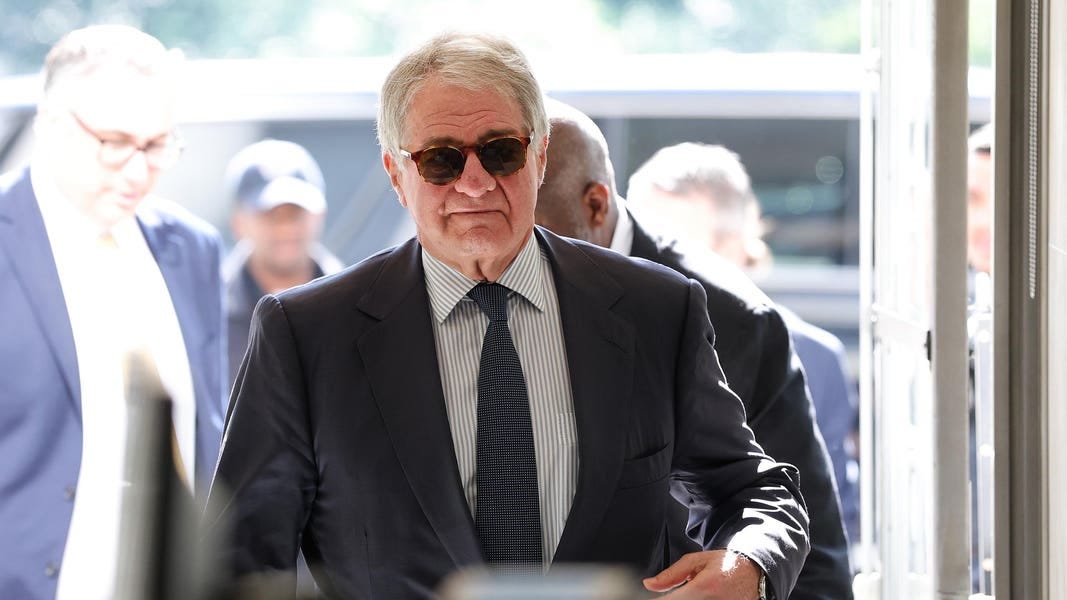
Black’s settlement with the U.S. Virgin Islands — in which he paid $62 million to obtain protection from prosecution in Epstein-related matters for himself, his attorneys, and people acting as his agents — explicitly acknowledges that “Jeffrey Epstein used the money Black paid him to partially fund his operations in the Virgin Islands.”
Black was scheduled for an eight-hour deposition as a “critical witness” in the Bank of America lawsuit. The bank settled for $72.5 million on the day he was originally scheduled to testify. Black avoided the deposition.
His attorney, Susan Estrich, calls the report’s conclusions “outrageous and false.”
Bank of America settled with shareholder money. No admission of liability.
And none of Black’s transactions with Epstein were ever audited by the IRS, according to Wyden.
“It could have blown the lid off Epstein’s cover of being a financial genius,” Wyden told reporters. “It looks like none of that ever happened. A bunch of federal officials were sleepwalking through this.”
Bank of New York Mellon, which wasn’t part of the public conversation a year ago, processed nearly $400 million through 270 wire transfers tied to Epstein. That included a string of 18 round-dollar $1 million wires in 2007 sent from Epstein-linked BNY accounts to his accounts at JPMorgan — a pattern Wyden described as highly suspicious and indicative of money laundering.
BNY failed to flag any of these transactions with the Treasury Department until 2019, more than a decade after they occurred. The bank could not identify a legitimate business purpose for the transfers.
Across the four banks, suspicious-transaction totals reported by the institutions approach $2 billion, although some transfers may appear in more than one bank’s filings.
Nearly all of it was reported only after Epstein’s final arrest, when the banks could no longer pretend he was merely an eccentric billionaire with unusually complicated tuition expenses.
One bank got it right.
HSBC Paris closed Epstein’s account in December 2007 — before his guilty plea, before his conviction, before the other major institutions examined here acted. Its compliance department identified red flags in transactions involving young women associated with the MC2 modeling agency and its owner, Jean-Luc Brunel, and terminated the relationship.
The others kept processing.
THE RUSSIAN PIPELINE
Epstein and his associates used correspondent banking accounts at Sberbank, Alfa Bank, and at least one other Russian bank — all now under U.S. sanctions — for approximately $200 million in wire transfers.
These were not abstract transactions.
The filings identify the names of specific women and girls in Russia, Turkmenistan, Belarus, and Turkey. The wire transfers were, according to Wyden’s investigation, correlated with the movement of women or girls around the world.
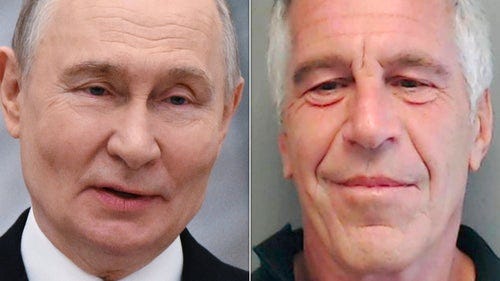
When the Justice Department released 3 million pages of Epstein files on January 30, 2026, Putin’s name appeared more than 1,000 times. “Russia” was mentioned nearly 5,900 times.
An FBI report dated November 27, 2017, based on a confidential human source, states that Epstein “was President Vladimir Putin’s wealth manager and provided similar services to President of Zimbabwe Robert Mugabe.” The same source claimed Epstein “had dirt on other people” and generated his wealth by “charging his clients fees to hide their money offshore.”
That claim has not been independently corroborated.
What has been independently documented is the infrastructure surrounding it.
Emails in the released files show Epstein spent years trying to reach Putin through Thorbjørn Jagland, the former Norwegian prime minister and secretary general of the Council of Europe.
In May 2013, Epstein suggested dinner in Paris with Bill Gates, adding that “Putin is welcome to join.”
In June 2013, Jagland told Epstein he had asked about a meeting and was told “it would happen.”
In January 2014, Epstein asked Jagland to explain to Putin that Russia needed “a more advanced version of Bitcoin.”
In June 2018 — three weeks before Trump’s Helsinki summit with Putin — Epstein wrote to Jagland: “I think you might suggest to Putin that Lavrov can get insight on talking to me.” Jagland replied that he would meet Lavrov’s assistant the next day and pass on the message.
Epstein told Jagland he wanted to help Putin and Russia “reinvent the financial system.”
Whether the FBI source’s claim is literally true or not, the financial architecture does not need a confidential source to speak for itself: hundreds of millions of dollars moving through sanctioned Russian banks, payments tied to the names of women and girls across several countries, and a documented years-long effort by Epstein to position himself as a financial adviser to the Russian president.
There is no publicly disclosed evidence that the FBI substantiated the source’s claim or pursued it to a documented conclusion.
That is its own kind of story.
THE COVER-UP
This is where the report moves from financial forensics to political obstruction — and the obstruction is not subtle.
Under the Biden administration, Wyden and bipartisan committee staff — including staffers from Republican Senators Mike Crapo and Marsha Blackburn — were allowed to review suspicious activity reports related to Epstein inside a Treasury Department reading room.
They could take handwritten notes.
They could not make copies.
Wyden asked Republican members to join him in subpoenaing the rest of the records.
They refused.
When the Trump administration took over, the door slammed shut.
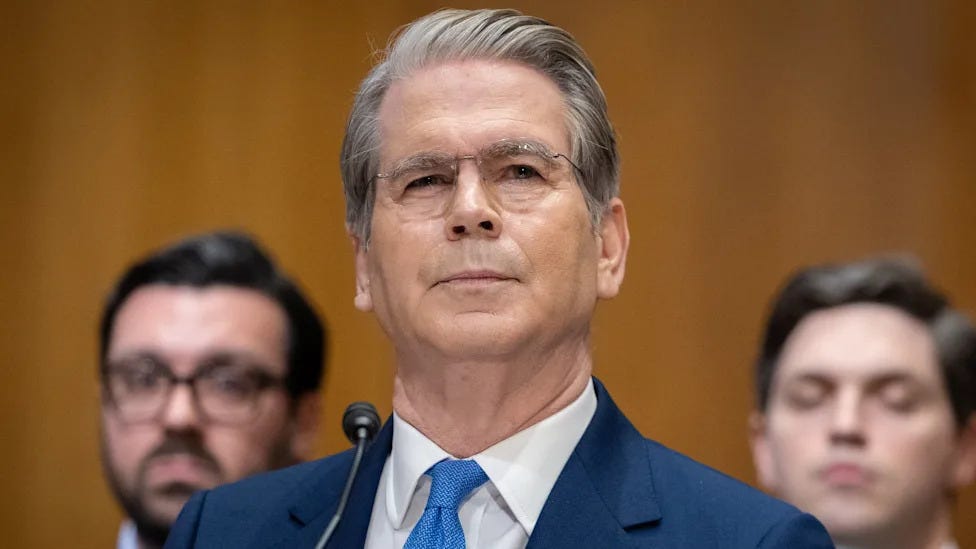
Treasury Secretary Scott Bessent rejected three separate requests from Wyden for continued access to the suspicious activity reports. One response, from Treasury’s legislative liaison, told Wyden that he was merely a single senator in the minority party and that “Treasury works with Committees conducting official investigations.”
Bessent has publicly downplayed the significance of the Treasury files and denied that the department has any investigative role in the Epstein matter.
Wyden has called this “a full-on pedophile protection program.”
In March 2026, Republicans blocked Wyden’s Produce Epstein Treasury Records Act on the Senate floor — legislation that would have compelled the Treasury Department to hand over its Epstein bank records to congressional investigators.
Wyden’s report singles out Senator Marsha Blackburn for blocking the legislation.
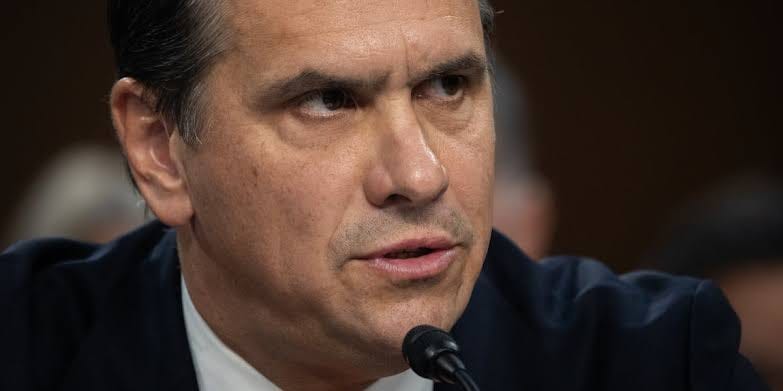
Meanwhile, according to Wyden’s investigation, then Deputy Attorney General Todd Blanche personally intervened to prevent the Drug Enforcement Administration from releasing a 2015 memorandum prepared by the Organized Crime Drug Enforcement Task Forces — a memo related to drug trafficking and prostitution involving Epstein and several associates.
Wyden’s investigators were told the DEA was prepared to comply with the request until Blanche intervened.
That memo remains hidden.
THE KILL
And then there is 60 Minutes.
In March 2026, Wyden sat for an interview with veteran CBS correspondent Sharyn Alfonsi, who was building an investigation into Wall Street banks’ relationships with Epstein and the U.S. Virgin Islands government.
Alfonsi was the same reporter who, in 2020, obtained the first photographs from inside Epstein’s jail cell and from his autopsy — work that won her a DuPont-Columbia Award.
The story never aired.
Two months after the Wyden interview, Alfonsi was fired by CBS News following a clash with editor-in-chief Bari Weiss over a separate segment — a report on Trump’s deportation program and El Salvador’s CECOT prison that Alfonsi said was factually correct and fully vetted by CBS attorneys and Standards and Practices.
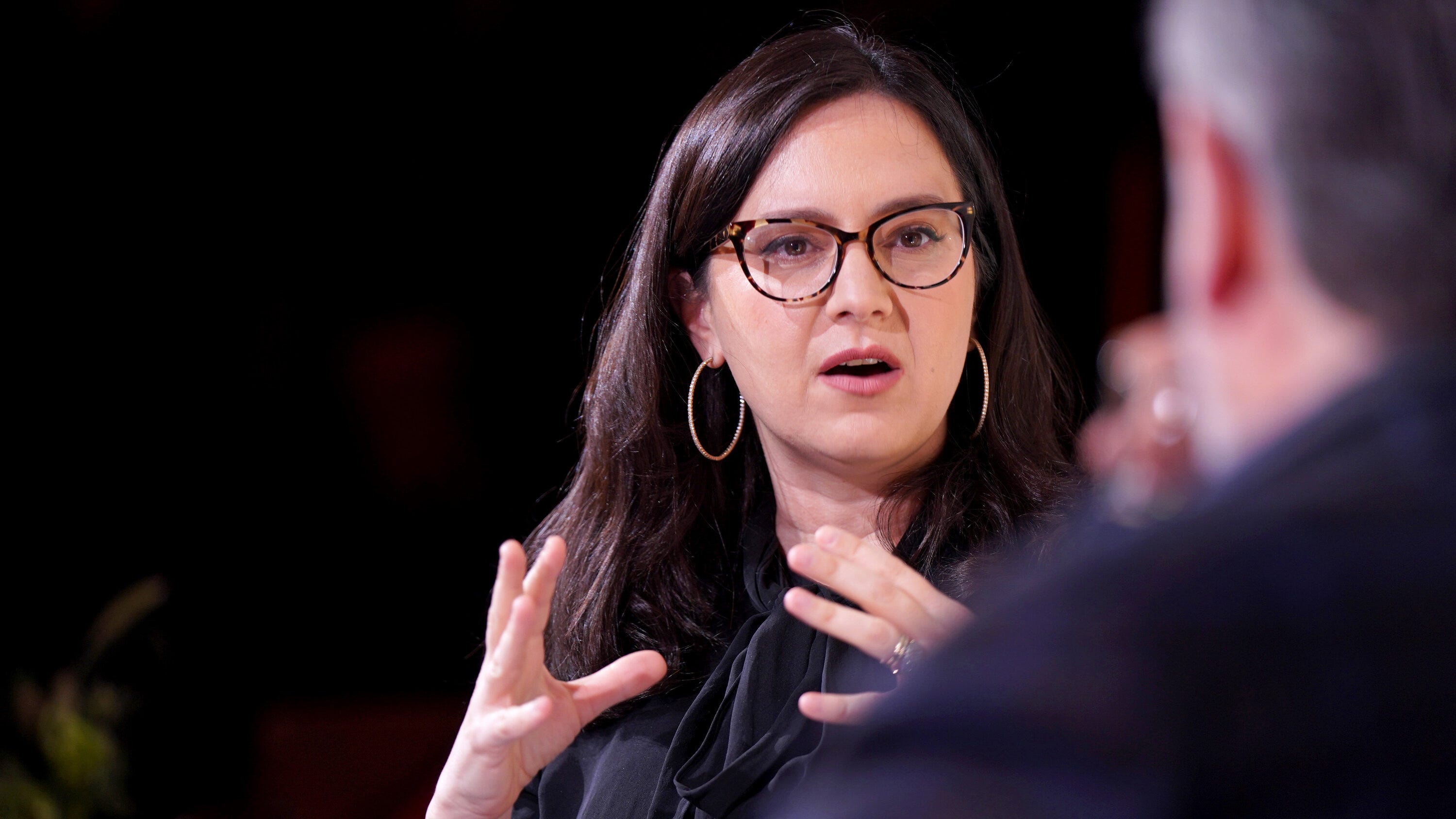
Alfonsi said the decision to pull it was “not an editorial decision” but “a political one.”
CBS fired her, fired her executive producer Tanya Simon, and fired correspondent Cecilia Vega.
Whether Alfonsi’s Epstein investigation played any role in those decisions remains unknown.
The result is not unknown.
Neither the Wyden interview nor the Epstein banking investigation has ever aired.
A CBS spokesperson confirmed the interview took place but said the story “had not been finished” by the end of the season. The network declined to say whether it would be revisited.
THE LEDGER
Let’s count.
Four banks reported suspicious Epstein-related transactions whose combined totals approach $2 billion, though some transfers may overlap across the institutions’ filings.
JPMorgan reported more than $1.3 billion only after years of minimal disclosure.
Jamie Dimon and Jes Staley gave irreconcilable sworn accounts of what Dimon knew and when.
Leon Black’s $170 million in payments — which his own settlement acknowledges helped fund Epstein’s Virgin Islands operations — were never audited by the IRS, according to Wyden.
The FBI had a source in 2017 claiming Epstein was Putin’s wealth manager. There is no public evidence the claim was substantiated or pursued to a documented conclusion.
Approximately $200 million moved through sanctioned Russian banks, with the names of specific women and girls attached to the filings.
The Treasury secretary blocked a senator from seeing the evidence.
According to Wyden, the deputy attorney general personally blocked a DEA organized-crime memo.
A Republican senator blocked legislation that would have forced transparency.
The television journalist who had the story was fired before it could air.
JPMorgan paid $290 million to victims and $75 million to the U.S. Virgin Islands.
Deutsche Bank paid $75 million to victims and a separate $150 million regulatory fine.
Bank of America settled for $72.5 million.
Shareholder money.
No individual banker criminally charged.
No executive facing personal consequences.
The only major bank in this record that acted early was HSBC Paris, which closed Epstein’s account in 2007.
Epstein died in 2019. Ghislaine Maxwell is serving twenty years.
Everyone else with serious institutional power walked.
THE FIRE
A year ago, we wrote: “You’ve laid the kindling. Now we need a fire.”
Wyden lit the match today.
Sixty-seven pages.
Four banks.
A money trail approaching $2 billion.
The banks’ own words on the record.
The Treasury’s own stonewalling documented in writing.
A 60 Minutes segment that never aired.
A blocked DEA memo.
A senator told to sit down because he was in the minority.
This report is the fire marshal’s report.
It tells you what burned.
It tells you who was fueling the fire.
And it tells you who looked the other way while the smoke poured under the door.
The question now is whether anyone with power — any prosecutor, any regulator, any committee chair, any attorney general — has the stomach to follow the money wherever it goes.
Because the alternative is what we have had for seven years: settlements paid by shareholders, evidence buried by appointees, and a financial system that processed the money that moved the girls and then pretended it did not know.
We said a year ago that the only thing more dangerous than the secrets Epstein took to his grave are the ones still being hidden by the living.
Nothing in Wyden’s report contradicts that.
Everything in it confirms it.
Closer to the Edge exists because readers choose to support us. Not banks. Not networks. Not the Treasury Department.
We take no advertising money and answer to no editorial board.
In a story about institutions that looked the other way, that's not a slogan. It's a job requirement.
Why isn't Wyden a national hero yet? He's been on the trail for years!
When will someone be able to match the money from these criminals to the members of Congress they bought?