
WRITTEN FOR YOUR U.S. REPRESENTATIVE TO FILE IN DISTRICT COURT
ENFORCE THE CONSTITUTION

NOTE: This is a court-ready constitutional complaint drafted for filing by a sitting Member of Congress. It asserts that Section 3 of the Fourteenth Amendment applies immediately and must be enforced now.
UNITED STATES DISTRICT COURT
FOR THE DISTRICT OF COLUMBIA
[NAME OF MEMBER OF CONGRESS],
United States House of Representatives
Washington, D.C. 20515
Plaintiff,
v.
THE PRESIDENT OF THE UNITED STATES,
1600 Pennsylvania Avenue NW
Washington, DC 20500
Defendant,
and
THE ARCHIVIST OF THE UNITED STATES,
National Archives and Records Administration
700 Pennsylvania Avenue NW
Washington, DC 20408
Defendant.
Civil Action No. _______
COMPLAINT FOR DECLARATORY AND INJUNCTIVE RELIEF
Plaintiff alleges:
I. INTRODUCTION
This action seeks a declaration that the current President of the United States is constitutionally disqualified from holding the office he presently occupies under Section 3 of the Fourteenth Amendment, because—after taking the Article II oath—he provided aid or comfort to individuals who engaged in an insurrection against the United States.
Section 3 states:
“No person shall be a Senator or Representative in Congress, or elector of President and Vice President, or hold any office, civil or military, under the United States, or under any State, who, having previously taken an oath … to support the Constitution of the United States, shall have engaged in insurrection or rebellion against the same, OR given aid or comfort to the enemies thereof. But Congress may by a vote of two-thirds of each House remove such disability.”
Section 3 is self-executing. When its conditions are met, the constitutional disability attaches immediately, without requiring impeachment, criminal conviction, or statutory implementation. Only a two-thirds vote of each chamber of Congress can remove the disability.
The sitting President took the constitutional oath required by Article II.
While serving as President, he issued sweeping pardons and commutations for individuals convicted of participating in the January 6, 2021 insurrection and directed the dismissal of pending prosecutions. These official acts relieved insurrectionists of criminal liability and constituted “aid or comfort” within the meaning of Section 3.Because the President engaged in conduct that triggered Section 3’s disability, he is constitutionally barred from holding the office of President right now. His continued exercise of executive authority is unconstitutional.
The President’s ongoing occupancy of an office he is constitutionally prohibited from holding causes immediate, concrete injury to Plaintiff in his capacity as a sitting Member of Congress.
II. JURISDICTION AND VENUE
Jurisdiction is proper under 28 U.S.C. § 1331 because this action arises under the Constitution.
Declaratory relief is authorized under 28 U.S.C. §§ 2201–2202.
Venue is proper under 28 U.S.C. § 1391(e).
III. PARTIES
Plaintiff is a sitting Member of the United States House of Representatives who has sworn an oath to support and defend the Constitution. Plaintiff’s constitutional responsibilities include legislating, oversight, appropriations, voting on nominations, and participating in the Twelfth Amendment electoral count.
Defendant United States of America is the sovereign entity responsible for enforcing constitutional limits on federal officeholding.
Defendant President of the United States currently occupies, and exercises the powers of, the office of President. Plaintiff alleges that the President is constitutionally disqualified from holding this office under Section 3.
Defendant Archivist of the United States administers federal records relating to presidential acts and has statutory responsibilities relevant to the Twelfth Amendment process and other functions that directly involve Plaintiff’s constitutional duties.
IV. FACTUAL ALLEGATIONS
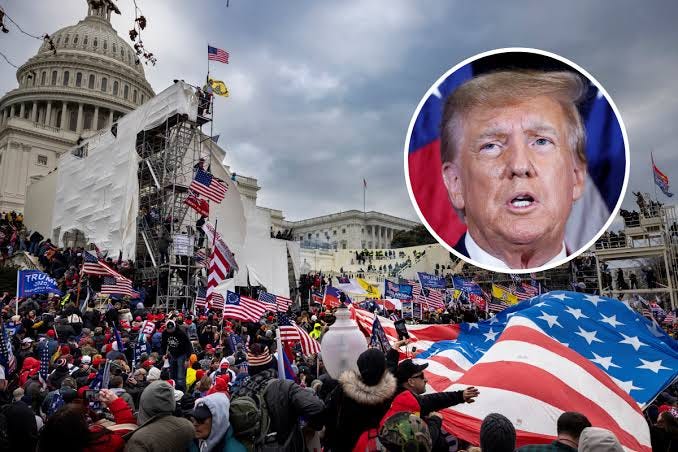
On January 6, 2021, individuals violently breached the U.S. Capitol in an effort to obstruct the constitutionally mandated counting of electoral votes. Federal courts, including this District, have repeatedly recognized the attack as an insurrection.
Hundreds of individuals were convicted for crimes committed during the insurrection.
After assuming the presidency and taking the constitutional oath, the President issued a mass pardon and commutation order clearing insurrection participants of criminal penalties and directing the Justice Department to dismiss pending prosecutions.
These official executive acts vacated sentences, ended prosecutions, and conveyed governmental protection and approval. Under Section 3, this constitutes aid or comfort to individuals who engaged in an insurrection.
Section 3’s disability attached at the moment the President—while serving as President—gave aid or comfort to insurrectionists. No impeachment vote, Senate trial, or congressional action is required to create or enforce this disability.
No two-thirds vote of each chamber of Congress has removed the disability. Therefore, the President is constitutionally prohibited from holding the office he presently occupies.
The President’s continuing exercise of executive authority creates ongoing constitutional injury to Plaintiff, including:
a. Plaintiff’s legislative authority is undermined because an ineligible President is signing or vetoing bills.
b. Plaintiff’s oversight duties are impaired because the executive branch is headed by an individual who cannot lawfully hold the office.
c. Plaintiff’s constitutional role in the Twelfth Amendment electoral count is compromised.
d. The separation of powers is destabilized by the presence of a constitutionally barred individual exercising Article II authority.
e. Plaintiff’s oath to support the Constitution is violated by being compelled to operate within an unconstitutional structure.
These injuries are current, concrete, and unavoidable.
V. CLAIM FOR RELIEF
(Declaratory Judgment — Section 3 of the Fourteenth Amendment)
Plaintiff incorporates paragraphs 1–21.
A real and immediate controversy exists regarding whether the President is constitutionally barred from holding office under Section 3.
Section 3 applies to the office of President and is self-executing.
The President, while serving in office and after taking the constitutional oath, provided aid or comfort to individuals who engaged in an insurrection.
Because no two-thirds vote of each House has removed the disability, the President is constitutionally disqualified from holding office.
Plaintiff is entitled to declaratory and injunctive relief.
VI. REQUEST FOR RELIEF
Plaintiff respectfully requests that this Court:
A. Declare that Section 3 applies to the presidency;
B. Declare that Section 3 is self-executing;
C. Declare that the President provided aid or comfort to insurrectionists while serving as President;
D. Declare that the President is constitutionally disqualified from holding the office of President;
E. Issue a permanent injunction preventing federal officials from recognizing or treating the President as eligible to exercise the powers of the presidency;
F. Grant such further relief as the Court deems proper.
Respectfully submitted,
[NAME OF MEMBER OF CONGRESS]
Member, U.S. House of Representatives
Pro Se (or by counsel)
If you believe Section 3 of the Fourteenth Amendment still means something, if you believe pardoning insurrectionists should have consequences, and if you want Congress to stop hiding behind “someone else should do it,” then don’t just read this. Share it. Email it. Drop it on the desk of your sitting U.S. Representative and make it their problem.
Paid subscribers keep Closer to the Edge alive long enough to do this work, and unpaid readers can still help by shoving this document directly into the bloodstream of Congress where it belongs. This doesn’t move unless people push it.
This is the best idea I've seen for effectively challenging in court Trump's misanthropy and mayhem. There are other potential plaintiffs with standing other than members of Congress - for example, any state. The many coattails of this kind of lawsuit are immense and have considerable political and publicity power. The case would stir intense furor on the right causing missteps by them and exposing their hypocrisy. Because I'm retired from law practice, I can't serve as counsel, but I would be more than happy to volunteer as an assistant for writing, researching, brainstorming, gathering evidence and whatever an attorney needs in order to pursue this. I'm also sending this to the A.G. of my state, Washington, who is not shy about taking on worthy causes.
sharing with my reps