
AMERICA'S SWIM IN MURKY WATER
The Naegleria Problem


There is a microscopic organism called Naegleria fowleri that lives in warm, stagnant freshwater — the kind of place where the water looks like iced tea and your brain says, eh, probably fine, which is how people end up in medical journals instead of vacation photos.
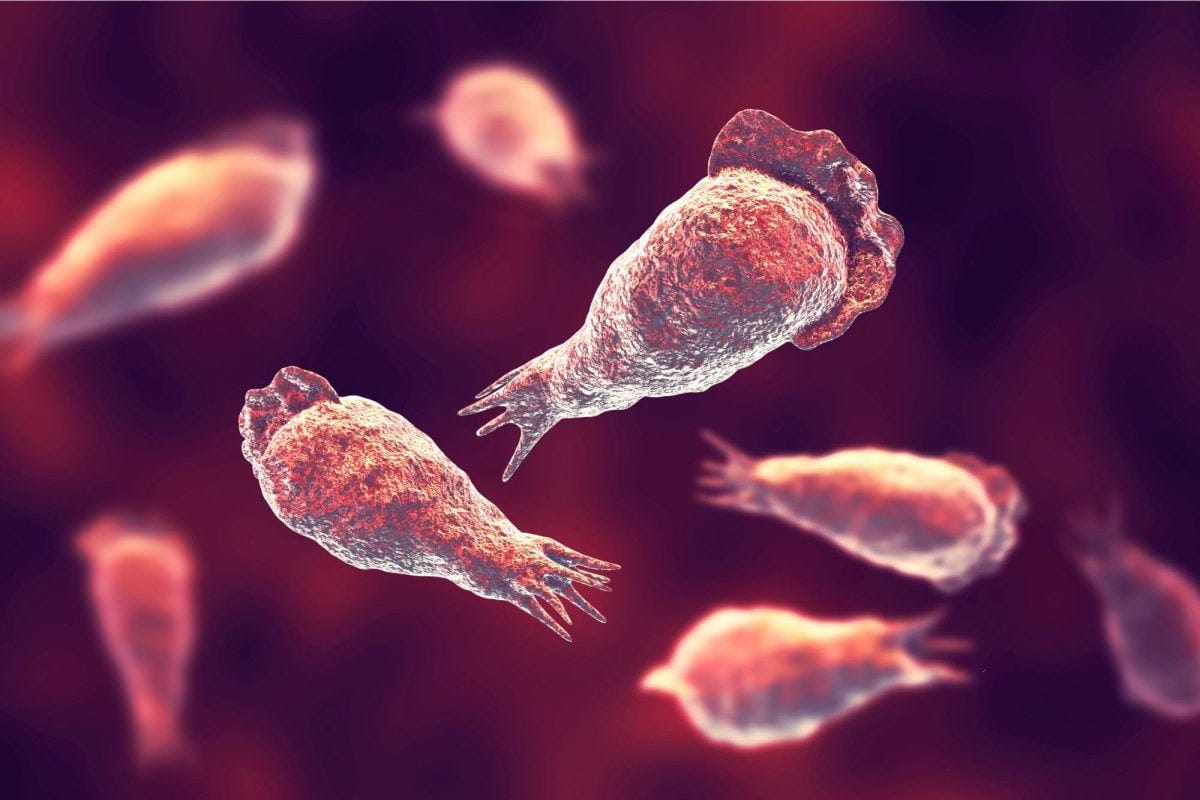
It doesn’t infect you by drinking the water. That would be too straightforward. It enters through the nose — usually when you dive, splash, or otherwise commit to a bad decision with real conviction. From there, it travels straight to the brain, because the human body, in its infinite wisdom, left the front door unlocked and labeled it “olfactory nerve.”
At first, it feels like nothing. Headache. Fever. Nausea. The kind of symptoms you attribute to leftovers, stress, or that one decision you knew was wrong but made anyway, because forward momentum is its own kind of logic. Then things escalate. Confusion. Loss of coordination. Hallucinations. Seizures. The brain swells, shuts down, and within about a week, the system is overwhelmed.
Fatality rate: over 97 percent. Medicine’s way of saying this is almost always how it ends.
It’s rare. It’s brutal. And it works because people underestimate the conditions that produce it.
ENTER THE WATER
Donald Trump is not an anomaly. Not a glitch. The logical outcome of a system that spent years marinating in exactly the conditions that produce him.
He didn’t appear from nowhere. He emerged from warm, murky political water — an ecosystem already thick with distrust, resentment, and a media infrastructure that had learned to treat chaos like a renewable resource. Decades of institutional erosion, cultural grievance, and reality bending just enough to snap later. The water was never clean. It just looked survivable.
America looked at that and said close enough, which is historically not a winning strategy.
THE ENTRY POINT
Like Naegleria, the breach wasn’t subtle.
Trump didn’t rise through policy or coalition-building. He cannonballed in through sheer spectacle — the rhetorical equivalent of kicking down the front door and demanding to know if anyone ordered a problem. The breach wasn’t hidden. It was televised, monetized, and somehow packaged as entertainment.
And once it existed, the system did what systems under stress reliably do: hesitate, argue, and hope things stabilize on their own.
They don’t.
EARLY SYMPTOMS
The early signs were easy to dismiss, so people did.
Norm violations were called refreshing. Outrage was branded authenticity. Behavior that once would have ended careers got reframed as “telling it like it is” — the political equivalent of licking a battery and calling it energy. Each escalation earned a shrug. Each warning earned an eye roll. The threshold moved. The system adapted — not by correcting, but by lowering its expectations until the abnormal started to feel like weather.

That’s how decline works. Quietly. Gradually. Then all at once. Then someone insists it was impossible to predict.
THE BRAIN
Naegleria fowleri doesn’t wander. It goes straight for the control center.
Judgment. Coordination. Reality processing. The parts of the system responsible for sorting true from false, for determining what is actually happening.
Once those start to fail, everything downstream follows. Usually while someone nearby explains, with full confidence, that everything is under control.
THE DELAY
The most dangerous part isn’t the speed.
It’s the window. The stretch where people say this isn’t that bad while the symptoms are clearly worsening. The instinct to normalize, rationalize, wait for something undeniable — preferably with a label, a panel discussion, a bipartisan statement. Something that makes the moment official.
By the time consensus arrives, the situation has moved on.
AFTER THE SWIM
Systems don’t collapse like buildings in movies. No single loud moment, no agreed-upon timestamp. They rot. They bend. They adapt to pressure in ways that feel manageable right up until they don’t.
The symptoms here are following the sequence precisely. Confusion where clarity used to operate. Distortion where shared understanding once held. The mechanisms for processing reality — still technically present, still technically running — grinding under sustained strain until obvious became a matter of debate and evidence became a matter of interpretation.
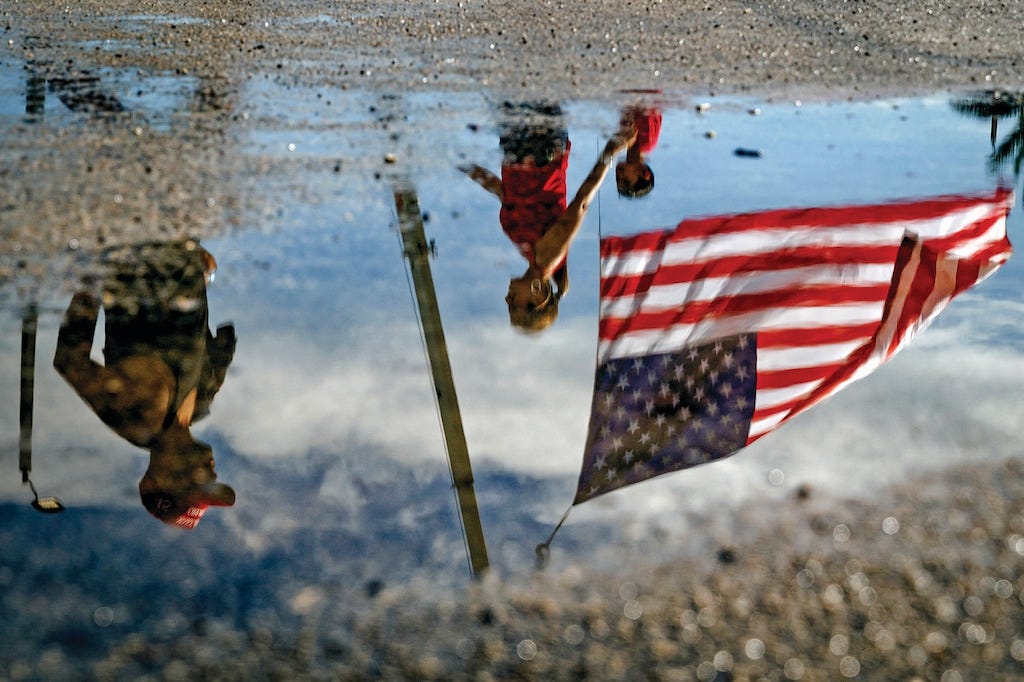
The conditions haven’t changed. The water is still warm. Still murky. Still survivable-looking. It always is. The danger doesn’t announce itself as danger. It arrives as tolerable, temporary, manageable — right up until it isn’t.
History is unambiguous on this: recognizing the damage doesn’t stop it. Awareness doesn’t reverse the progression. The thing that interrupts the conditions would have to be something more than knowing they exist.
Until then, it moves the way these things move.
Quietly at first.
Then through the parts of the system that can least afford to fail.
Then all at once.
Excellent analogy. We took a dip in the muddy water and got Trumped.
Brilliant analysis, also terrifying.