
THE COMFORT OF “BOTH SIDES”
How Exhaustion Turns Analysis Into Surrender



There is a disease spreading through activist spaces right now and it looks like wisdom from a distance.
Up close it smells like a corpse.
The disease is equivalence. The symptoms are familiar. Republicans build Concentration Camps. Democrats fail to close them. Conclusion: same thing. Republicans authorize the raids. Democrats issue statements so toothless they couldn’t bite through wet bread. Conclusion: same thing. Republicans send ICE into neighborhoods at 4 a.m. Democratic governors deploy police to gas protesters who showed up to say something about it. Conclusion: same thing.
At some point “both sides” stops being an argument.
It becomes a casket.
And the person making it climbs inside voluntarily and pulls the lid shut and calls it enlightenment.
I understand the seduction. God help me, I do. Because social media has built an entire political genre around one emotional payoff: the reveal. The moment when you finally see through the illusion. Not Republicans. Not Democrats. Everyone. Every politician is corrupt. Every institution is rotten. Every movement is a grift. Every leader is compromised. You get to stand above the burning battlefield, hands clean, and announce to your followers that everyone below you is equally covered in ash.
It feels profound.
It feels cynical in the cool way, the way that means you’re smarter than the people still fighting.
It is almost never either of those things.
It is exhaustion. Wearing a disguise. Holding a megaphone.
Here is a thing that should not require a lengthy essay in the year of our Lord 2026 but apparently does:
Different things are different.
A Democratic governor ordering police to clear a protest deserves criticism. A Democratic mayor authorizing pepper spray on a crowd of grandmothers deserves criticism. A wealthy Democrat protecting their portfolio while people are dying in detention deserves criticism so sustained and so vicious it follows them to every fundraiser they ever attend for the rest of their natural lives.
Nobody serious disputes this.
But criticism is not equivalence.
The person who starts a fire and the person who fails to extinguish it deserve different judgments. They are not occupying the same moral position. They are not the same category of human failure. The distinction is not subtle.
Erase that distinction and accountability becomes impossible.
Erase it and you have built a philosophy that is, functionally, indistinguishable from surrender.
Let me tell you about some people everyone seems to have forgotten.

Andy Kim visited Delaney Hall, saw conditions inside, then got pepper-sprayed outside while trying to de-escalate the standoff.

Emily Randall made seven oversight visits to the Tacoma detention center. Before a vigil outside the facility, she attempted another oversight visit and was denied entry.

Yassamin Ansari visited the Eloy Detention Center and met Arbella “Yari” Rodríguez Márquez, a leukemia patient who, according to Ansari’s office, was coughing up blood, too weak to stand, and had lost 55 pounds. Ansari went back to Washington and demanded urgent medical care.

Dan Goldman has made weekly oversight visits to 26 Federal Plaza and turned his Manhattan office into a triage center for families caught in the ICE dragnet. His office has helped facilitate the release of more than 30 migrants.
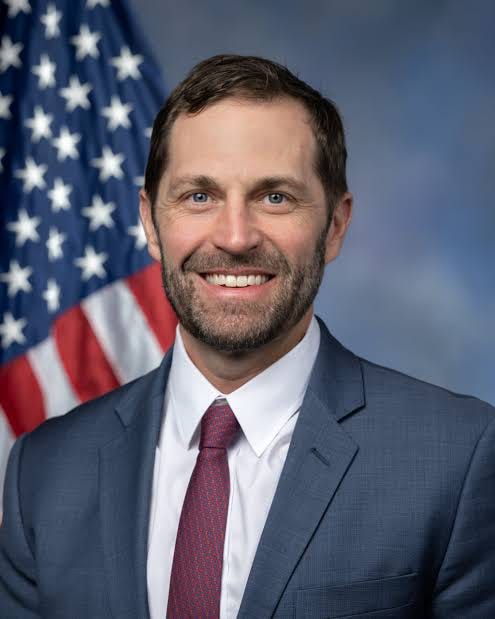
Jason Crow has repeatedly conducted and led oversight visits at the Aurora ICE facility, demanded answers from the Trump administration, and joined litigation to protect congressional access.

LaMonica McIver went to Delaney Hall for a congressional oversight visit. After federal officers arrested Newark Mayor Ras Baraka outside the facility, McIver was later charged and indicted over the confrontation.
A dozen Democratic members of Congress sued the Trump administration in federal court for illegally blocking their oversight visits. They won. ICE ignored the ruling and invented new restrictions, but they kept showing up.
These are not people running the operation. These are people trying to stop it with the limited, imperfect, maddeningly insufficient tools available to them in the middle of a constitutional crisis inside a system designed to make accountability nearly impossible.
And there are voices, loud voices, influential voices, voices with platforms and communities built on this movement, insisting these people are no different than the ones running the camps.
That is not analysis.
That is what happens when a brain has been online too long and starts confusing the feeling of clarity with actual clarity.
Political exhaustion does something dangerous to the human brain.
It compresses everything.
Nuance becomes intolerable. Every story becomes the same story. Every institution becomes the same institution. Every failure becomes evidence of the same grand unified conspiracy of mediocrity. Everybody is guilty. Everything is rotten. Nothing matters and nobody is trying and the whole thing is a joke.
The people who benefit most from that type of thinking are the people causing the greatest harm.
Because once distinctions disappear, accountability disappears with them.
If everyone is corrupt, why investigate corruption? If everyone is responsible, why identify specific responsibility? If every politician is identical, why organize against any particular politician? If the whole thing is a joke, why show up?
The answer becomes that you don’t.
You scroll. You complain. You disengage. You congratulate yourself for seeing through the system while the system continues to operate exactly as designed, exactly as intended, with exactly the outcomes the people running it wanted: fewer protesters at the gate, fewer cameras in the facility, fewer bodies making the machine uncomfortable.
The powerful have always loved cynicism.
Cynicism is the one political philosophy that has never once threatened them.
Outrage builds movements.
Hopelessness builds audiences.
And there is a meaningful difference between those two things that I am not willing to pretend doesn’t exist.
Criticize Democrats when they fail. Do it loudly. Do it specifically. Do it with names and dates and the receipts. Hold them to the standard the moment demands and do not let them off the hook because the alternative is worse.
But stop confusing disappointment with equivalence.
Stop mistaking the feeling of being done with the act of being right.
Stop announcing your exhaustion to communities full of people who showed up to a protest for the first time last month and are watching you, right now, to see whether this is worth continuing.
Because here is what I know about those people. They are scared. They are new. They do not know the difference between the party and the movement. They found a door and they walked through it and they are standing on the other side looking for someone to tell them whether to keep going.
And the most dangerous thing, the thing that helps the people running these concentration camps more than almost anything else, is a prominent voice in that space picking up a megaphone and announcing to everyone within earshot that the whole thing is a fucking joke.
Demoralization is a strategy.
It has always been a strategy.
And it works whether it comes from the right or from the left or from someone standing in a parking lot in Newark who is frustrated and exhausted and understandably furious and has temporarily confused surrender with insight.
One party has members getting pepper-sprayed, denied entry, indicted, and dragged into court fights while trying to inspect these facilities.
The other party is mostly doing photo ops, press hits, and applause for the machine.
These are not the same thing.
They will never be the same thing.
Closer to the Edge is a reader-powered publication. No advertisers. No corporate backing. Just the truth, delivered with extreme prejudice.
Support the work at CloserToTheEdge.net.
Why are the Detention Center Operations not arrested, prosecuted and convicted for blocking official Congressional oversight?
Thank you for highlighting the heros!